
Supplement Guide | Collagen 01 | The Most Abundant Protein in Your Body Isn't What You Think


Collagen is one of the most popular supplements on SuppCo, and one of the most misunderstood. This is Part 1 of SuppCo's four-part series on collagen: what it is, what the science says, and how to use it.
More than 93,000 people on SuppCo have collagen in their stack. Across the platform, that comes from over 3,000 distinct collagen products. Many of them found it through the beauty aisle.
That's a fine entry point. But it means starting at the wrong end of the story.
Collagen isn't a skin ingredient. It's the structural protein that holds your body together.
Collagen makes up roughly 30% of all the protein in your body. It is not a wellness trend. It is architecture.
The Protein Your Body Runs On
Proteins do different jobs. Some carry oxygen. Some fight pathogens. Some transmit signals between cells. Collagen's job is structure. It forms long, rope-like fibers that give tissue its tensile strength, its ability to stretch without tearing, its resistance to compression over time.
Those fibers are built from a tight triple helix, three protein chains wound around each other. Think of a braided cable. That braid is what makes collagen so mechanically strong. It's why tendons can handle explosive loads. Why skin snaps back after being stretched. Why bones absorb impact without shattering.
The primary amino acids involved are glycine, proline, and hydroxyproline. You don't need to memorize those. What matters is that your body needs specific raw materials to build collagen, and it builds it through an active synthesis process that can be supported, disrupted, or simply slowed by age.
How Your Body Builds It
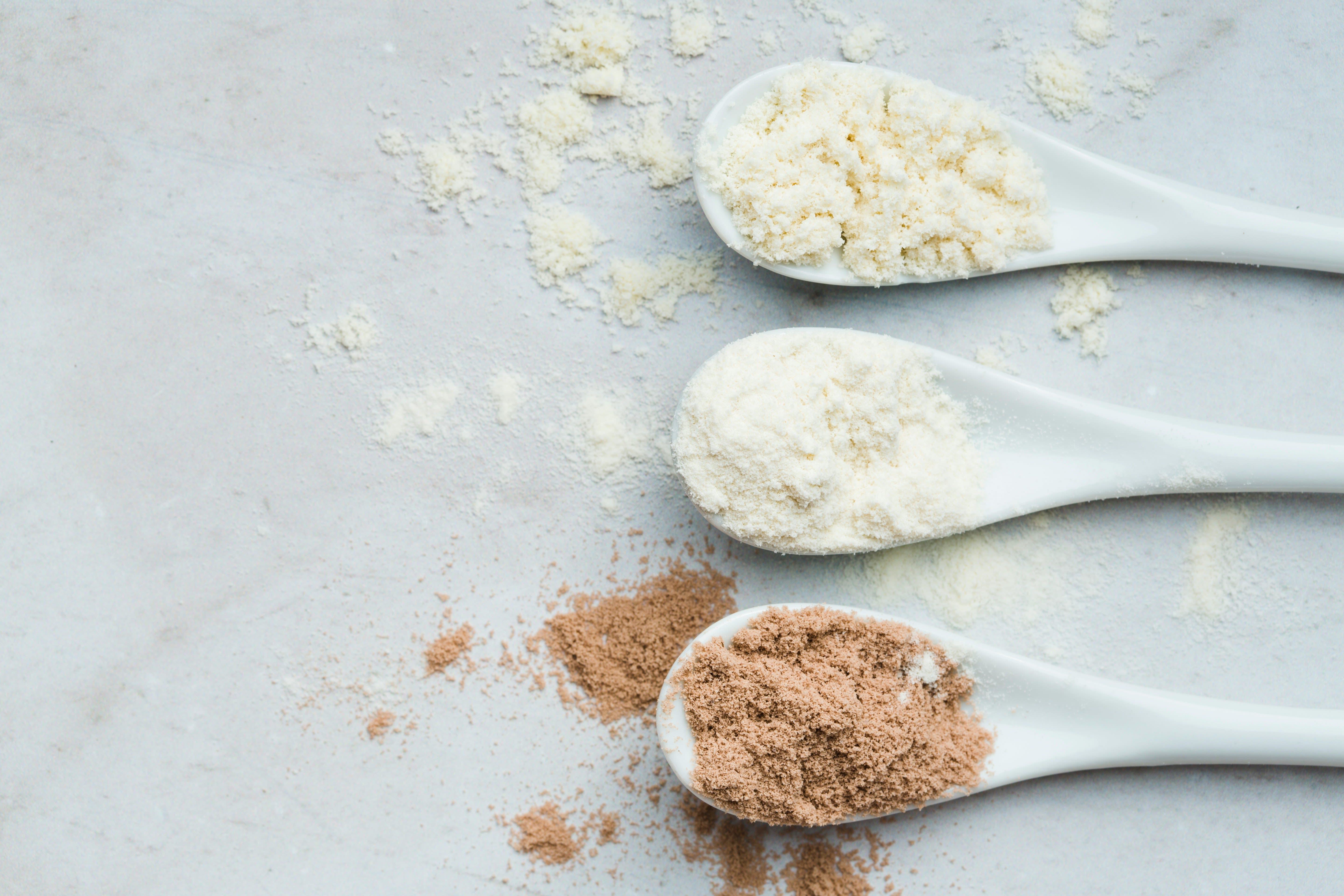
Collagen isn't something you passively have. It's something your body actively manufactures, continuously, throughout your life.
The cells responsible are called fibroblasts. They're found in connective tissue throughout the body and their primary job is producing and maintaining the extracellular matrix, the structural scaffolding that surrounds and supports cells. Fibroblasts synthesize collagen precursors, which are then assembled and cross-linked into the mature fibers that give tissue its strength.
One nutrient plays a non-negotiable role in this process: vitamin C. It's a required cofactor for two enzymes that stabilize the collagen triple helix. Without adequate vitamin C, collagen synthesis stalls and existing fibers become structurally unstable. This is why severe vitamin C deficiency causes scurvy, a disease characterized by tissue breakdown and poor wound healing. The collagen connection is direct. This is also why vitamin C shows up consistently in discussions of collagen supplementation, and it's something we'll return to when we get into how to actually take collagen.
28 Types, Three That Matter Most
There are 28 known types of collagen. For the purposes of understanding supplementation, three are worth knowing.
Type I is the most abundant collagen in the body. It's the primary structural protein in skin, bone, tendons, and ligaments. Most collagen supplements are targeting Type I.
Type II is the dominant collagen in cartilage. It's the type most relevant to joint health research, and it's what most joint-specific supplements are built around.
Type III is found alongside Type I in skin and in blood vessel walls. It's particularly abundant in fetal tissue and plays a role in wound healing.
Type specificity matters when you're evaluating what a product is actually designed to do. A supplement built around Type II hydrolysate is doing something meaningfully different than one built around Type I.
Where Collagen Lives in Your Body
The list is longer than most people expect.
Skin dermis, the structural layer beneath the surface, is roughly 70 to 80% collagen by dry weight. Joint cartilage is largely collagen matrix. Bone is about one third collagen by weight, and that collagen scaffold is what gives bone its flexibility. Without it, bone would be brittle rather than resilient.
Tendons and ligaments are predominantly collagen. The gut lining contains collagen. Corneas, the transparent tissue at the front of the eye, are almost entirely collagen arranged in a precise lattice to allow light to pass through. Blood vessel walls depend on collagen for structural integrity.
This is what people mean when they call collagen a whole-body protein. It is not doing one thing in one place. It is the structural substrate of nearly every tissue in the body.
Why Production Declines (and When It Starts)
Collagen synthesis peaks somewhere in your mid-20s. After that, production declines at roughly 1% per year. By your mid-40s, you've lost somewhere between 15 and 20% of peak production capacity. By your 60s, the cumulative loss is substantial and measurable in tissue density, joint resilience, and skin structure.
Several factors accelerate the decline beyond the baseline rate of aging. UV radiation directly damages collagen fibers in the skin and impairs synthesis. Smoking reduces collagen production and accelerates degradation. High sugar intake triggers a process called glycation, where sugar molecules bind to collagen fibers and make them stiffer and more prone to damage. Chronic inflammation disrupts the synthesis pathway.
Some of these are controllable. The baseline aging effect is not. That's the context in which the diet and supplement question becomes relevant.
Getting Collagen from Food

Before we get to supplements, it's worth acknowledging that food sources exist and matter.
Bone broth, made by simmering animal bones and connective tissue, is a traditional dietary source of collagen peptides and gelatin. Cuts of meat that include skin, cartilage, or connective tissue, think chicken thighs, oxtail, or short ribs, provide collagen directly. These aren't exotic foods. They've been part of human diets for a long time.
You can also support collagen synthesis indirectly by making sure you're getting adequate protein and vitamin C. The amino acids in any high-quality protein source provide the raw materials fibroblasts need to build collagen. Eggs, fish, meat, and legumes all contribute. Vitamin C-rich foods, citrus, bell peppers, leafy greens, ensure the enzymatic machinery that assembles collagen can actually do its job.
So why supplement at all? The real answer is that dietary collagen intake is inconsistent for most people, and the specific peptides in hydrolyzed collagen supplements may have effects beyond what whole food sources can reliably deliver. That's a claim worth scrutinizing, and it's exactly what Part 2 is about.
Topicals, Beauty, and Why We're Focused on What You Swallow
Here's the non-marketing version of the topical collagen conversation...
Most topical collagen products, the creams, serums, and moisturizers, contain collagen molecules that are too large to penetrate the dermis. They sit on the surface of the skin, where they can provide some moisturizing effect, but they cannot reach the structural layer where collagen synthesis actually happens. Applying collagen to the outside of skin is not the same as delivering it to the dermis.
Some topical formulations take a different approach. They use hydrolyzed peptides, retinoids, or growth factors to stimulate the skin's own collagen synthesis rather than trying to deliver collagen directly. That's a more defensible mechanism, and it's a separate conversation from supplementation.
SuppCo is focused on what you put in your body. That's where the clinical research lives, and it's where this series is focused.
Which raises a question worth sitting with. If topical collagen can't typically reach the dermis from the outside, does oral collagen actually reach it from the inside? The answer requires understanding how hydrolyzed collagen behaves in the digestive system, whether the peptides survive intact, and whether they make it to target tissues in a biologically meaningful form. The short answer is more interesting than the skeptics and the marketers would both have you believe.
That's where Part 2 begins.
Here's what to carry forward:
Collagen is a structural protein, not a skin ingredient. It is the scaffolding of nearly every tissue in the body.
Your body manufactures collagen continuously through fibroblasts, with vitamin C as a required cofactor.
Types I, II, and III are the most relevant to supplementation. Type specificity matters when evaluating products.
Synthesis peaks in your mid-20s and declines roughly 1% per year thereafter.
Food sources contribute, but dietary collagen intake is inconsistent for most people.
Topical collagen and oral collagen are doing fundamentally different things. This series covers oral supplementation.
The central question of Part 2: does supplementing with collagen actually change anything in the body?
Remember, the biology is the foundation. Everything that follows in this series builds on it.