
Science Corner 75 | The Vitamin Your Body Refuses to Make

Every multivitamin on the shelf has it. Nearly every mammal on Earth can make it inside its own body, with limited exceptions… Humans are one of those exceptions. So are guinea pigs, most bats, and every other primate. For a long time, that looked like bad luck. Research suggests it might have been a trade we made on purpose.
We lost the ability to make our own vitamin C millions of years ago. That loss might have protected our ancestors from something worse.
The Trial That Started Modern Medicine
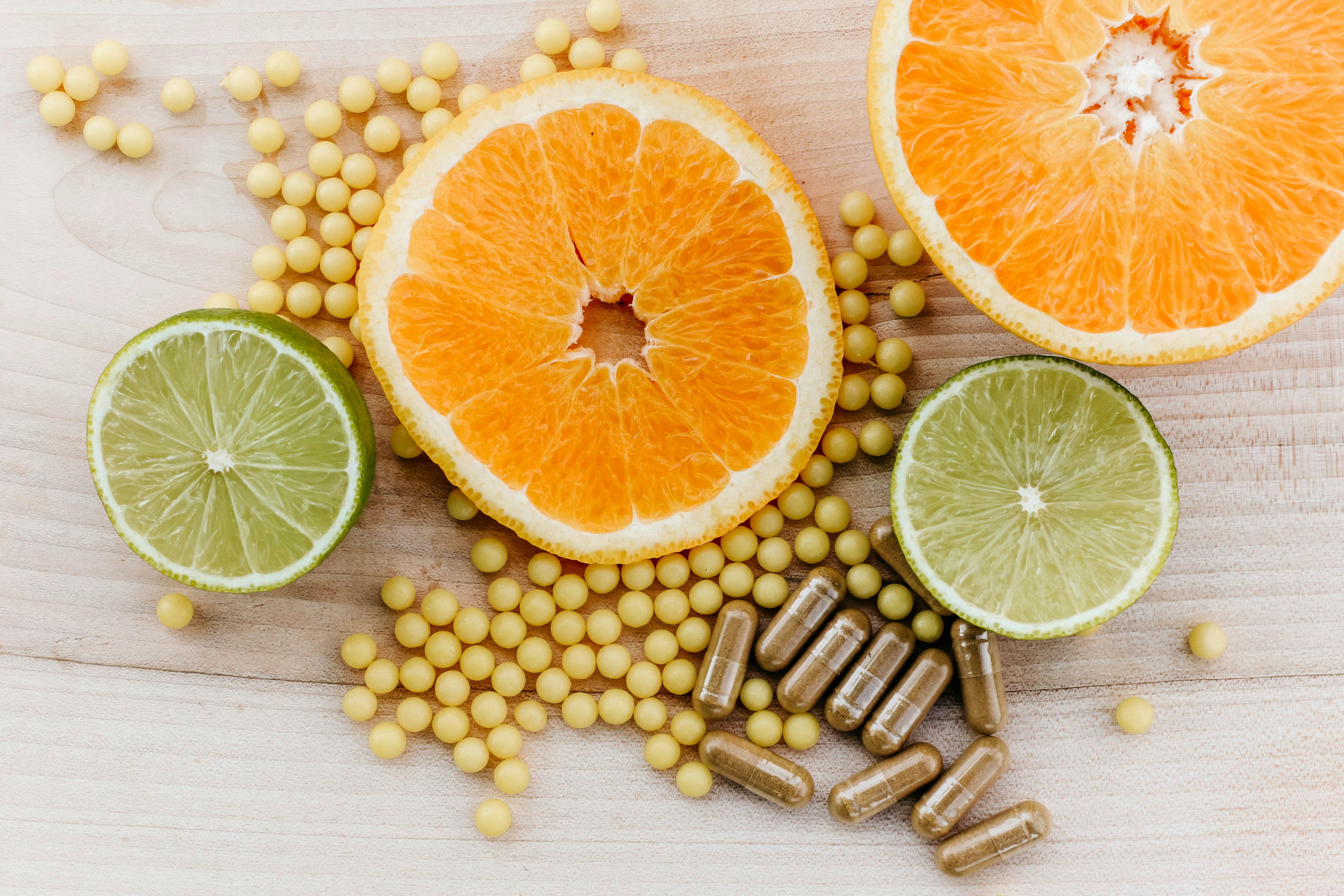
In 1747, a Scottish naval surgeon named James Lind ran an experiment still taught in medical schools today. Scurvy was killing sailors by the thousands on long voyages: bleeding gums, wounds that wouldn't close, joints that ached for no clear reason. Lind took twelve sailors on the ship Salisbury, all sick with scurvy, split them into six pairs, and gave each pair a different remedy: vinegar, seawater, cider, a spiced paste, sulfuric acid, or two oranges plus a lemon. The citrus pair recovered fast. The rest didn't.
But what really makes this famous is the design. A control group, one changed variable, and a measured outcome, this experiment is often cited as medicine's first controlled clinical trial. Lind didn't know why (or how) citrus worked, but we do now. Vitamin C is a building block the body needs to finish assembling collagen, the protein that holds skin, gums, and blood vessels together. Take it away, and those structures fail, which is what scurvy looks like up close.
The Gene We Gave Up
Humans can't make their own vitamin C because we lost a gene called GULO somewhere in our evolutionary past. We're not alone. Guinea pigs lost it. Most bats lost it. Other primates lost it too, but not always at the same time or in the same way. The GULO gene has been switched off independently, more than once, in unrelated branches of the animal family tree. To evolutionary biologists, that pattern is typically a clear signal. Losing a gene that many times usually means it wasn't very costly to lose… or it came with a real benefit.
A recent study points to one possible benefit: parasite resistance. Researchers found that parasitic flatworms lay more eggs when extra vitamin C is around. Mice bred without the GULO gene, on a low vitamin C diet, resisted infection better than mice that kept the gene, which shed more eggs and were more likely to die. Now, this is one theory, tested in mice. Not proof of what happened to ancient humans. But I find it fascinating because it reframes a trait we've traditionally treated as a flaw into a possible benefit.
Losing the GULO gene only looks careless until you remember oranges exist. If a nutrient is that easy to outsource to lunch, evolution didn't leave us broken by dropping it, it just potentially removed the parasite risk and let mealtime cover the rest.
Double your dose and your blood levels barely move. Your kidneys just work overtime to get rid of the rest.
Why More Isn't More
In 1970, Linus Pauling, a chemist who had already won two Nobel Prizes, published Vitamin C and the Common Cold. He argued that megadoses could prevent colds and possibly more. The public believed him, sales spiked, and the idea that more is better attached itself to this vitamin for decades. And as I can personally attest to growing up with my mother, much of this lore still persists today.
Vitamin C enters your bloodstream through a transporter in your gut, and that transporter has a ceiling. Below about 100 milligrams, you absorb nearly all of it. Push past a gram, and absorption efficiency drops. Blood levels plateau no matter how much more you swallow. The Linus Pauling Institute at Oregon State, ironically named after the same scientist, now cites similar data to explain why oral megadosing never delivered what he promised.
One exception: IV vitamin C skips the gut entirely and can push blood concentrations tens to hundreds of times higher than any pill could reach. At those concentrations, research suggests it can generate hydrogen peroxide that stresses cancer cells more than healthy ones, and small trials show patients tolerate it well alongside chemotherapy. It's a different mechanism than a tablet, still very early and experimental, but interesting nonetheless.
What the Newest Research Shows
What should a healthy adult expect from vitamin C today?
For colds, a 2023 meta-analysis of ten randomized trials found that taking 1 gram or more daily doesn't prevent colds. But people who were already supplementing before they got sick saw real benefits once they did catch one: cold severity dropped by about 15%, and severe symptoms lasted 26% less time. Contrary to popular belief, starting vitamin C after symptoms appear doesn't get you that same benefit (for a deeper dive on supplements that can help with colds, check out zinc).
Two 2026 findings are also worth keeping an eye one. A study of Japanese adults over 64 linked lower blood vitamin C to reduced gray matter volume and weaker memory-network connectivity. And while interesting, it is an observational, cross-sectional finding: correlation, not proof that vitamin C caused the difference. A separate study had participants eat two kiwifruit a day for eight weeks and found higher skin vitamin C, more collagen, and better skin function afterward. That's a stronger evidence of cause and effect, but with only 24 participants (and no placebo group), still not conclusive.
However, I think both of these studies are worth pointing out because it shows that vitamin C can have larger reaching implications outside of what has typically been viewed as helping prevent the traditional cold.
A few practical takeaways:
Food generally covers need. The daily requirement is 75 to 90 milligrams, and one orange or half a cup of red bell pepper meets it.
Timing beats dose for shortening colds. Taking at least 1 gram of vitamin C daily before you get sick does more to shorten a cold than loading up once symptoms start.
Megadosing mostly ends up in your urine, not your bloodstream. If supplementing, stay under 1 g.
Vitamin C is a well-mapped nutrient with real (often ignored) limits: a ceiling on what your body absorbs, a plausible evolutionary reason we lost that ability, and evidence that rewards steady use over panic-dosing. Get enough from food, treat megadose claims with a raised eyebrow, and let ongoing research test the rest.
--
Personal note from Jordan
I'm not sure why it took me so long to write a science corner on vitamin C. We are 75 issues in, and vitamin C seems like such an obvious one to talk about. Growing up, vitamin C was literally the only supplement in my house. And when we got sick, there was only one plan: chug orange juice, chew tablets, and let the vitamin do the rest. No thought to timing, no ceiling on how much was enough. More was (literally) the whole strategy.
Reading the research now, that plan gets partial credit. Vitamin C can, to some degree, shorten a cold... just not by loading up after you're sick, or past what your kidneys flush anyway. Folklore like this survives because it's half right, running on decades-old science.
I don't blame my mother for any of it. Everyone was doing the same thing back then. However, I blame her a little for the sequel: These days, when I get sick, she still recommends vitamin C. I've explained the research on this topic more than once, but she still keeps in the cabinet, waiting for the first sniffle. I'm not changing her mind anytime soon.