
Science Corner 44 | A New Study on Clinician Knowledge Should Change How We Approach Supplements


Every now and then a study comes along that forces us to reconsider how well our healthcare system prepares clinicians for real world nutrition decisions.
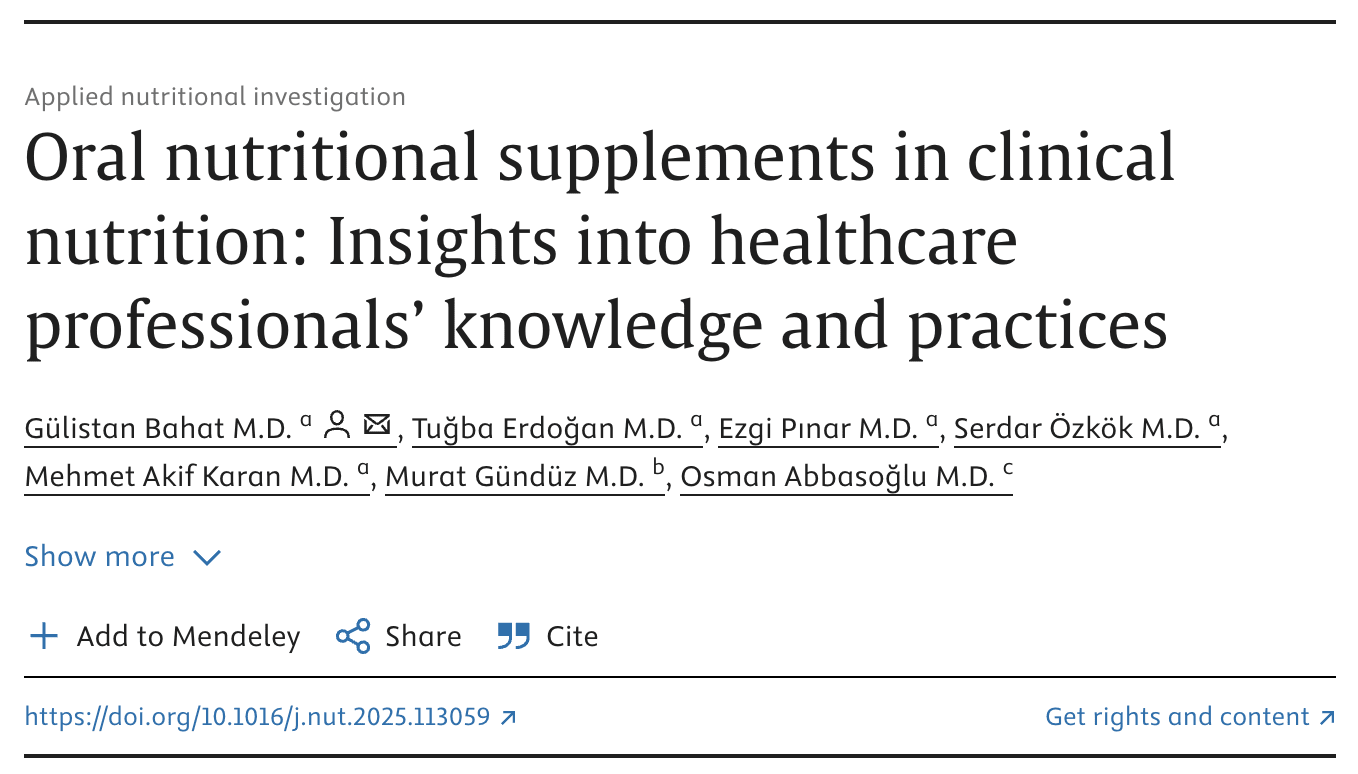
A recent paper did exactly that. It assessed how well trained healthcare professionals understand the proper use of oral nutritional supplements, and the results were both revealing and concerning.
Oral nutritional supplements are not niche wellness products.
They are clinical tools used for malnutrition, chronic disease management, recovery, and healthy aging. Yet the people most responsible for recommending or prescribing them often lack the foundational knowledge needed to use them effectively.
The KEPAN survey included 277 healthcare professionals. Nearly half (48%) were dietitians and another 37% were physicians. The remainder included nurses and pharmacists. In other words, the respondents were exactly the individuals we would expect to be most familiar with nutritional care. Despite this, 8 out of 22 guideline based questions were answered incorrectly by more than half the participants.

The most striking knowledge gaps appeared in high impact clinical areas, with incorrect response rates that are difficult to ignore:
Chronic kidney disease: 86% incorrect
Neurological disorders: 80% incorrect
Dysphagia: 79% incorrect
Geriatric nutrition: 73% incorrect
General supplement indications: 72% incorrect
Diabetes specific nutrition: 69% incorrect
When three quarters of dietitians and physicians miss basic items on supplement use in older adults or dysphagia, or when nearly nine out of ten answer chronic kidney disease questions incorrectly, the issue is not a minor educational gap. It reflects a structural deficiency in how we prepare clinicians for real nutritional decision making.
Why these gaps matter beyond the clinic
One might assume that such results reflect a regional training pattern or a single society’s guidelines. However, surveys across Europe and North America reveal similar patterns. Nutrition receives remarkably little time in many medical and allied health curricula, and supplements receive even less. As a result, a well informed consumer may actually know more about certain supplement categories than the average clinician.
This mismatch is contributing to a cultural shift. People are seeking guidance from longevity clinics, consumer testing platforms, and wellness companies because they feel they are not receiving actionable nutrition advice from traditional healthcare. When clinicians are unsure how to use creatine, omega 3s, vitamin D, glycine, or specialized oral formulas in common clinical situations, patients go elsewhere for answers.
It is important to state that clinicians are not at fault. They simply were not trained for the nutritional complexity of modern practice. Nutrition science has moved quickly, supplement science has moved even faster, and professional education has not kept pace.
The KEPAN findings make this tension visible. They highlight how far training lags behind the needs of real patients, especially older adults and individuals with chronic disease.
What needs to change
Closing these knowledge gaps requires a coordinated approach. Some of the most impactful strategies include:
Earlier and mandatory integration of nutrition and supplement science into medical and dietetic training
Interdisciplinary models in which physicians, dietitians, nurses, and pharmacists learn to apply guidelines together
National and international societies creating shared, evidence based training modules
Case based learning so clinicians practice applying guidelines rather than memorizing them
Better training will not only improve clinical outcomes. It will also improve trust. When clinicians can speak confidently about the benefits and limitations of nutritional interventions, patients stop feeling the need to seek advice elsewhere.
A broader cultural shift
The supplement and longevity sectors are innovating rapidly. Companies are designing new formulations, measuring their effects, and generating consumer facing evidence. Meanwhile, many clinicians still receive only a few hours of nutrition education in their training. The consequence is predictable. A widening gap between what patients want to understand and what clinicians feel prepared to discuss.
The KEPAN study offers a clear message.
Nutritional care must be treated as a core clinical competency. Oral nutritional supplements are powerful tools, but only when used with expertise. If healthcare systems want to remain central in guiding patient health, they must close these education gaps. Otherwise, patients will continue to look elsewhere.
--
Personal note from Jordan
Earlier this year, during my annual physical, I found myself explaining to my primary care physician what berberine was and why I take it. They were not opposed to it, they had simply never heard of it. That moment stayed with me because it captured the central issue raised in this study. Supplement knowledge and training remain limited across much of traditional healthcare.
We cannot wait for the entire system to catch up. We have to own our health and be our own best advocates. Yes, medical education needs to evolve, but until that happens, each of us should aim to be informed, thoughtful, and proactive about the choices we make. When we do that, we elevate the quality of our conversations with clinicians and strengthen the path toward better long term health.
Citations from this article
Bahat, Gülistan, et al. "Oral Nutritional Supplements in Clinical Nutrition: Insights into Healthcare Professionals’ Knowledge and Practices." Nutrition (2025). Link.