
Science Corner 50 | What Does It Mean to Truly Test a Supplement?

If you follow the supplement industry closely, you already know that there is a difference between what should happen and what sometimes does happen. The industry is rife with examples of fake and counterfeit supplements that hurt consumers.
A supplement label is supposed to reflect reality. Nothing more, nothing less.
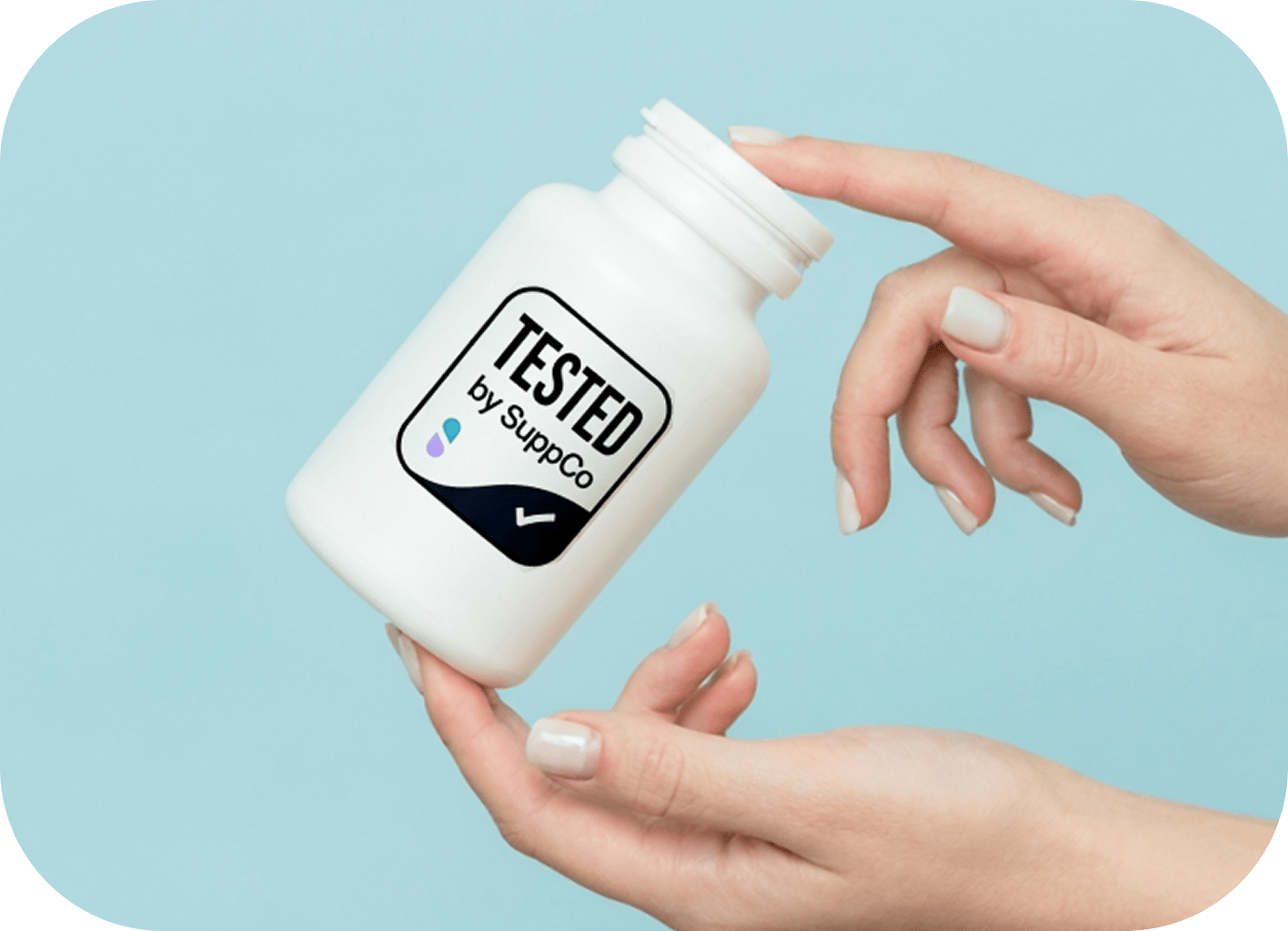
A capsule labeled 500 mg should contain 500 mg. An ingredient listed on a Supplement Facts panel should be present, identifiable, and measurable. That expectation sounds simple, but analytically verifying it is more complex than most people realize.
With the launch of TESTED by SuppCo, I want to step back and explain why the structure of this program matters from a scientific perspective. The distinction is subtle in concept, but meaningful in practice.
The Limitation of Traditional Testing and Certification Models
Most e-commerce marketplace testing and third party certifications rely on manufacturer submitted samples. A brand selects a batch, pulls a unit directly from the production line, and submits it for analysis. An e-commerce marketplace or third-party certification verifies the sample through lab testing.
From a laboratory standpoint, this approach can confirm that a specific batch is capable of meeting specification. It demonstrates that the system works under controlled conditions.
What it does not necessarily capture is what happens before or after that moment.
In 2025, SuppCo's team tested 44 supplements that were live on marketplaces that require third-party testing, and 22 of them failed. We purchased the failing products just like the average consumer would, revealing a clear gap that shows that traditional sample testing does not protect users.

Even when a product clearly and honestly passes testing off the production line, that is not the same condition the product users buy shows up in. Supplements do not move directly from a production line into your kitchen cabinet. They move through filling lines, packaging, warehouses, shipping routes, seasonal temperature swings, and distribution centers. They may sit for months before purchase. Even in a well run system, variability enters the equation.
That variability is not hypothetical. It is physical and chemical.
What Actually Changes Over Time
Even in properly manufactured products, ingredients are subject to time and environment. Formulation science exists precisely because compounds are not static.
Consider a few examples:
Probiotics are living organisms. They are typically labeled with a specific number of colony forming units at expiration. Over time, exposure to heat, humidity, and oxygen reduces viability. Responsible manufacturers account for this by adding overages during production, anticipating decline across the stated shelf life. The real question is whether the labeled potency is still present months later, under real storage conditions.
Fish oil presents a different challenge. Omega 3 fatty acids are polyunsaturated, which makes them biologically useful but chemically vulnerable. Exposure to oxygen, light, and heat accelerates lipid peroxidation. As oxidation progresses, peroxide values increase and the oil can become rancid. A pristine sample taken off the line may perform perfectly. A bottle that has experienced temperature fluctuations during shipping may not.
Botanicals and polyphenol rich extracts contain complex mixtures of compounds, some of which are sensitive to moisture and light. Marker compounds used to standardize extracts can decline if packaging integrity is compromised. Certain vitamins, such as vitamin C or specific B vitamins, are inherently unstable under prolonged heat or light exposure.
None of these realities imply poor manufacturing. They are expected stability considerations addressed through packaging choices, desiccants, nitrogen flushing, and formal shelf life testing. But stability is ultimately probabilistic. It must hold under real world conditions, not just theoretical ones.
A sample pulled directly off the production line represents peak condition. Off the shelf testing evaluates whether that product remains within specification after experiencing time, transport, and storage.
That distinction is central.
What Off the Shelf Testing Changes
TESTED by SuppCo was designed around a simple premise: evaluate the product the same way a consumer acquires it.
Products are anonymously purchased directly from brand websites. There is no pre-selection of batches and no advance notification. Samples are analyzed by ISO 17025 accredited laboratories, the global standard for analytical competence, using validated methods.
Testing focuses on two core pillars:
Identity, confirming that the ingredient present is what the label claims
Potency, quantifying whether the measured amount aligns with label declarations
For certification, products must consistently meet or exceed 95 percent of tested label claims. If a result is inconclusive, additional off the shelf units are purchased and retested. Certification is not granted on a single favorable data point.
This structure acknowledges several scientific realities at once: batch variability can occur, analytical noise exists, and stability may shift potency over time. Retesting annually further reinforces that quality is not a one time event, but an ongoing commitment.
Why 95 Percent?
Analytical chemistry is not binary. No measurement is exact to the milligram. Between instrument variability, extraction efficiency, and method precision, a reasonable tolerance must be built into any defensible standard.
A 95 percent threshold reflects a scientifically appropriate range while still holding products accountable to label accuracy. It balances rigor with the practical limits of laboratory measurement.
How This Fits With TrustScore
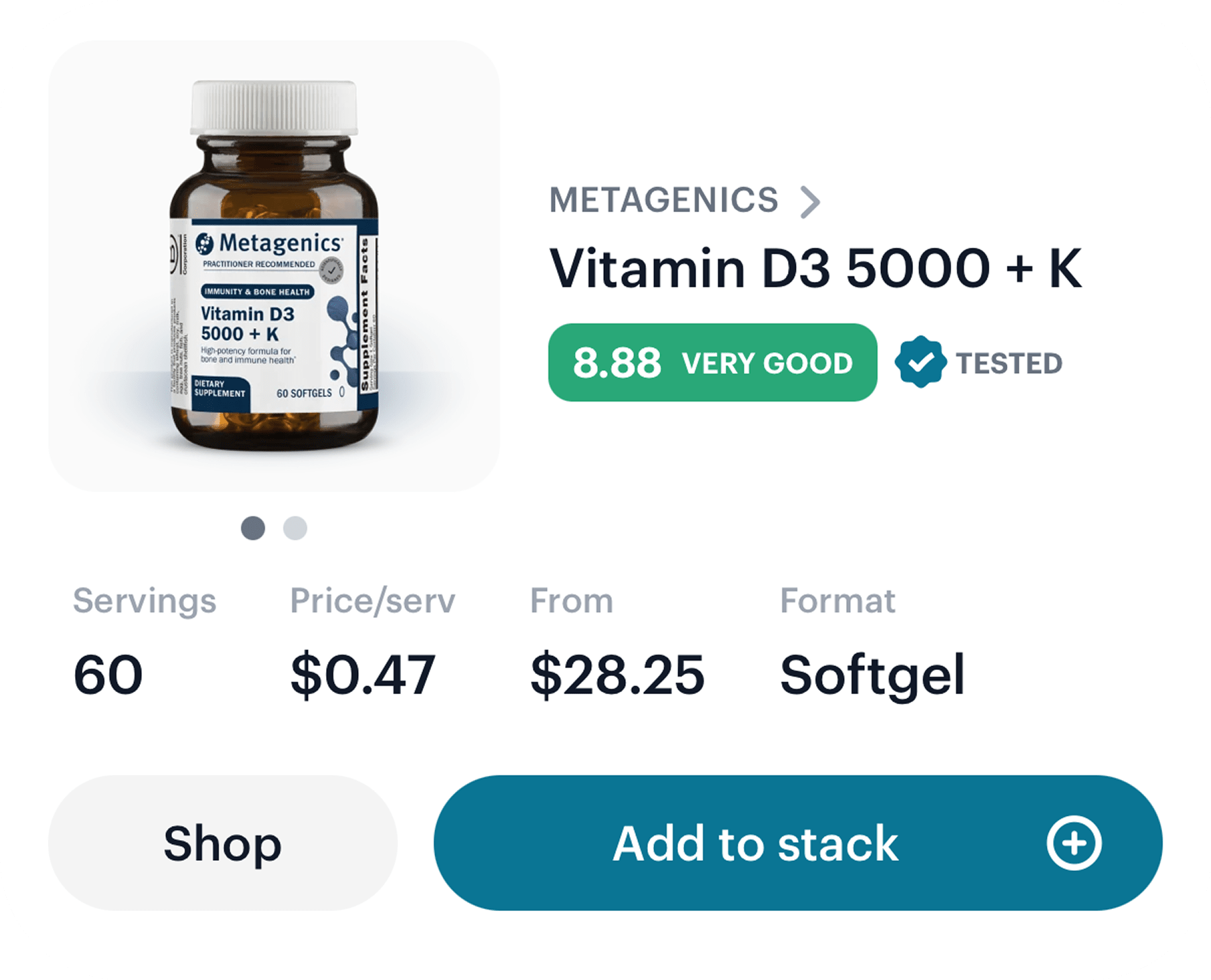
TrustScore evaluates quality systems, certifications, and manufacturing practices across more than 35,000 products. It examines whether a brand has the infrastructure and documented processes that should produce high quality supplements.
TESTED evaluates the measurable outcome. It answers whether a specific bottle, purchased under normal conditions, matches its label.
From a scientific perspective, both dimensions matter. Strong systems reduce risk. Independent analytical verification confirms delivery. Together, they create layered assurance rather than relying on documentation alone.
Why This Matters
The supplement industry has matured significantly over the past decade. Many leading brands have invested heavily in internal quality controls and third party validation. That progress is real.
At the same time, time, temperature, oxygen, and handling remain unavoidable forces. Measuring products as consumers actually receive them removes avoidable uncertainty and aligns testing with lived reality.
Testing off the production line confirms capability. Testing off the shelf confirms performance under real world conditions. That is not a critique of manufacturing. It is a recognition of how chemistry and biology behave over time.
When certification reflects that reality, standards move forward.
--
Personal note from Jordan
Before we ever launched TESTED, we ran a significant amount of independent product testing internally. What we saw reinforced something I had suspected for years. There is real variability in this space.
Some products perform exactly as they should. Others fall short of their label claims in ways that are not always obvious to consumers. In most cases, it is not malicious. It is variability, stability, manufacturing drift, or insufficient oversight. But the outcome is the same. The person buying the product does not receive exactly what they believe they are purchasing.
If SuppCo is going to position itself as a trusted scientific resource, we cannot simply evaluate documentation and assume execution. We have to measure outcomes. Creating the TESTED certification was one way to ensure that we are not just advising from the sidelines, but actively verifying performance on behalf of our users.
At the end of the day, our responsibility is not to brands. It is to you, the person trying to make an informed decision. If we can reduce uncertainty and raise the standard of verification, even incrementally, that is meaningful progress.