
Science Corner 79 | Green Tea Is Safe. The Extract Comes With a Warning Label

People have been drinking green tea for well over a thousand years with essentially no safety concerns. Green tea extract, the concentrated supplement version of the same plant, has a shorter and… rougher history. It has been restricted in Europe, flagged by food regulators, and tied to at least one case of liver failure serious enough to need a transplant. Same plant. Very different risk profile.
A drink safe enough to have without a second thought becomes a different substance once it's concentrated into a capsule.
A Leaf With a Long Head Start
Legend credits a Chinese emperor named Shennong with discovering tea around 2700 BC, tasting hundreds of wild plants to sort the helpful ones from the harmful ones. Documented trade records for tea date to around 59 BC. Centuries later, Buddhist monks carried tea seeds from China to Japan, and by 1191 a monk named Eisai was back in Japan with a fresh batch of seeds and later wrote a book, Kissa Yojoki, arguing tea could keep people healthy. He wasn't wrong about the plant. He just had no way to know why, or how.
From Leaf to Capsule
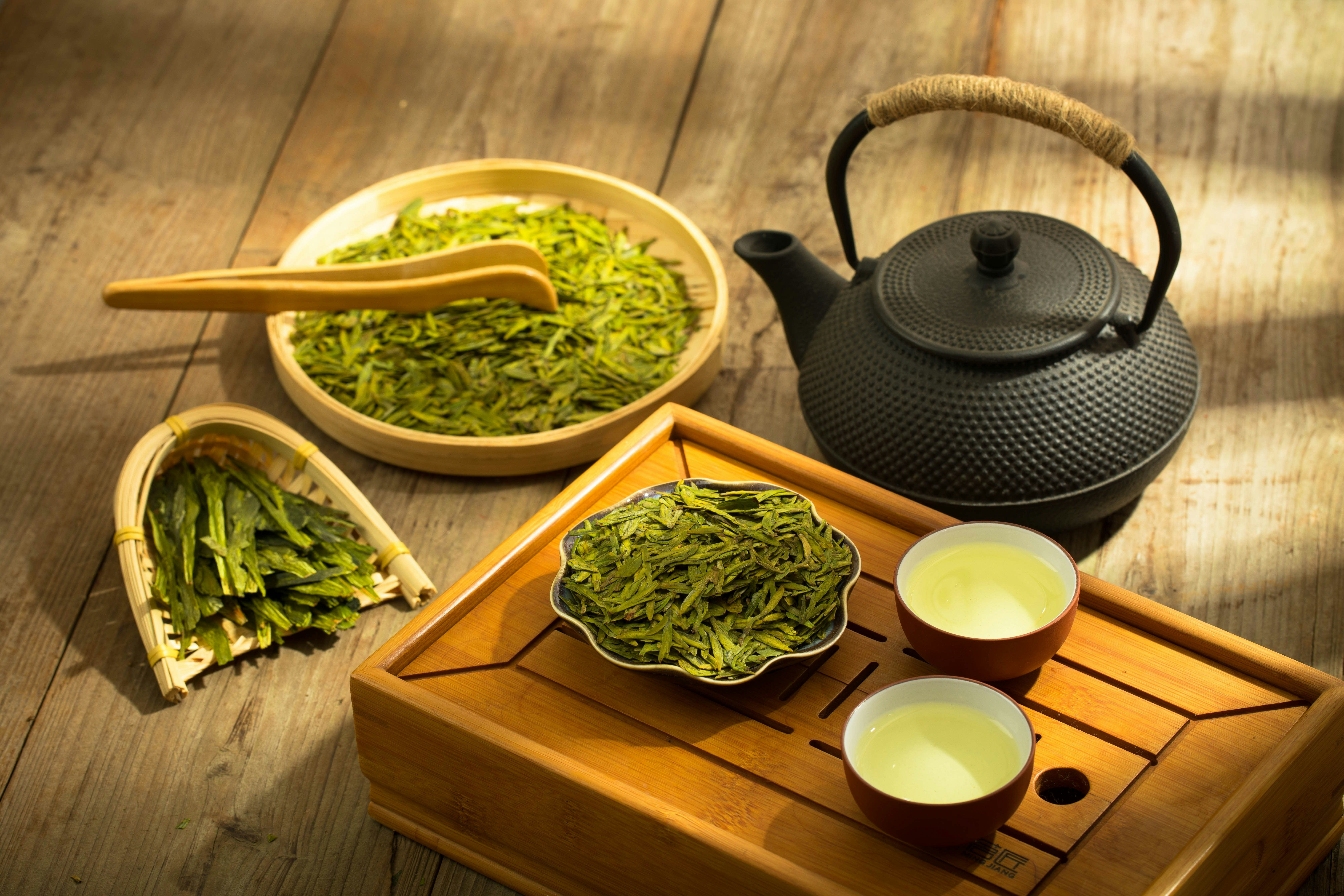
Green tea comes from the same plant as black and oolong tea, Camellia sinensis. The difference is processing: green tea leaves are steamed or pan-fired right after picking instead of being left to oxidize, which preserves catechins, a family of plant compounds that oxidation would otherwise break down. The most studied catechin is EGCG, short for epigallocatechin gallate.
A cup of brewed green tea delivers roughly 50 to 100 milligrams of EGCG. Per a 2018 European Food Safety Authority report, heavy tea drinkers average 90 to 300 milligrams of EGCG a day from infusions, topping out near 866 milligrams. A single extract capsule can contain anywhere from 5 to 1,000 milligrams of EGCG, standardized and concentrated, with none of the water or time it would normally take to drink that much tea.
Catechins And Weight Loss
EGCG works mainly as an antioxidant, neutralizing unstable molecules called free radicals before they damage cells. In lab and animal studies, catechins also switch on AMPK, an enzyme that favors burning stored fuel over building new fat. That mechanism built an entire weight loss industry around this supplement.
A 2025 systematic review pooling 14 trials found that 11 of them, about 79%, reported reductions in weight or BMI, with a bigger effect in trials that paired green tea with exercise. Weight loss without exercise ranged from 1.1 to 7.4 kilograms across studies, and EGCG doses varied widely, from 99 to 1,350 milligrams a day.
The review counted which individual trials found an effect rather than combining them into one statistical estimate, a design that can't fully separate the supplement's effect from the exercise many participants were also doing. Even with that limitation, most of the trials in this batch reported some benefit, with a notably consistent signal.
Where Catechins Pays Off
Blood pressure and cholesterol tell a better story. A meta-analysis of 13 randomized trials found green tea catechins lowered systolic blood pressure by about 2.1 points and diastolic by about 1.7 points, with modest drops in total and LDL cholesterol too. The effect was bigger in people who started with elevated blood pressure, and bigger in studies using extract rather than brewed tea. If there's one place the concentrated form earns its reputation, this is it.
The Cancer Question
Large observational studies point in different directions depending on which cancer you ask about. One pooled analysis of 20 studies found that tea drinkers showed roughly 35% lower rates of esophageal cancer across 20 pooled studies, but no meaningful link to colorectal cancer was found in a pool of more than two million people (aside from a borderline signal in women). Pancreatic and breast cancer studies show no consistent association. These are studies of tea drinking, not the extract, so at best they show association, not cause, and the association doesn't even agree from one cancer to the next.
Very Little of What You Swallow Gets Used
Catechins are some of the worst-absorbed plant compounds on record. One pharmacokinetic study pegged EGCG's oral bioavailability at just 0.1% to 0.3%, meaning less than 1% of what you swallow ever reaches your bloodstream.
A separate review of 97 bioavailability studies ranked tea catechins near the bottom of the list overall, well behind isoflavones and quercetin (compounds notorious for being poorly bioavailable). Body weight changes that further. In one small study, people with obesity absorbed 24 to 27% less catechin into their blood than lean participants given the identical dose. One thing reliably raises absorption, taking green tea extract on an empty stomach pushes more EGCG into the bloodstream, likely by overwhelming the gut's normal first-pass processing.
Warning: Liver injury from green tea extract has been documented at ordinary labeled doses. You don't have to overdose to get hurt.
A Watch Point
Green tea has a clean safety record. Green tea extract does not. EFSA's aforementioned 2018 review found EGCG doses at or above 800 milligrams a day measurably raised liver enzymes in clinical trials. A U.S. Pharmacopeia review documented injury cases across a wide range, from 140 milligrams a day up to about 1,000, with genetics possibly explaining why some people are affected and others aren't.
In a yearlong trial of 1,075 postmenopausal women carrying a high-risk variant of UGT1A4, a gene that helps the liver clear compounds like EGCG, saw their liver enzymes climb more than twice as much as those without it. If genetic testing is something you already have access to, checking your UGT1A4 status before starting is worth doing. If it isn't, skipping green tea extract as a supplement altogether is a safer decision.
A few practical takeaways:
Skip the extract if you're already drinking the tea. The weight loss case for either form is weak, so the capsule doesn't add much upside to offset its added risk.
Stay meaningfully under 800 milligrams of EGCG a day, and choose a label that states its EGCG content rather than a vague "green tea extract" blend.
Watch for fatigue, dark urine, or abdominal pain in the first few months of use, and stop and call your doctor if any of it shows up.
Talk to your doctor first if you have any liver history, drink alcohol regularly, or take medication that's processed by the liver.
Given the track record, green tea extract deserves the same respect you'd give any concentrated plant compound (if not more): know your dose, know the form, and don't assume a “natural” plant origin guarantees immunity. Tea earned its safety record over a thousand years of steady use. The extract is still writing its own, one case report at a time.
--
Personal note from Jordan
I gave green tea a fair shot for years. My wife drinks it most days and loves it, so I tried different brands, different steep times, matcha, sencha, all of it. None of it worked for me. I just don’t enjoy it, plain and simple (perhaps my inner Ted Lasso). That's not a knock on the plant. Plenty of people love it. I'm just not one of them.
Because the taste never won me over, I looked at the extract instead. I took it for a stretch in college, then looked hard at the data behind it. It doesn't earn a spot in my stack. Berberine, creatine, vitamin D, these have a track record and a mechanism that make sense to me for what I'm trying to do. Green tea extract, next to those, is a lot of risk for a limited upside.
Also, as an aside... not all supplements need to be winners. Not all supplements need to be in our stack. We should be talking about, reading about, and learning about the ones that we shouldn't be taking as well. For me, this one is not a winner, but the only way to know is to do the research (or let me do it and write about it for you). Happy Thursday.