
Science Corner 65 | 181 Studies Just Made the Case for Fiber


Most people get their cholesterol checked once a year… if at all. And most of those panels measure the same three or four markers they've been measuring since the 1980s. One of the most common questions we get at SuppCo is some version of "are my supplements actually working?"
It's a fair question, and the answer is: you can't know if you're not measuring.
This week's study is a good example of what that looks like in practice. A meta-analysis published in Advances in Nutrition, 181 randomized controlled trials and more than 14,500 participants, gives us the clearest picture yet of what soluble fiber supplementation does to key lipid markers. If you're taking a fiber supplement and wondering whether it's doing anything, this research can help guide you on what to look for, and which numbers to track.
What the study found
Across the 181 trials included in the meta-analysis, soluble fiber supplementation produced significant reductions in four key cardiovascular risk markers:
LDL cholesterol dropped by an average of 8.28 mg/dL
Total cholesterol dropped by an average of 10.82 mg/dL
Triglycerides dropped by an average of 5.55 mg/dL
Apolipoprotein B (Apo-B) dropped by an average of 4.5 mg/dL
HDL, the so-called good cholesterol, was essentially unchanged. Consistent with what we know about dietary interventions, HDL tends to respond to exercise and weight loss more reliably than to fiber intake.
The dose-response findings are particularly actionable. Every additional 5 grams per day of soluble fiber was associated with a 5.57 mg/dL reduction in LDL and a 6.11 mg/dL reduction in total cholesterol. That's a meaningful, incremental effect, though not one that increases indefinitely. LDL reductions appeared to peak around 10 g/d, while total cholesterol and triglyceride reductions were greatest at around 15 g/d.
Why Apo-B matters more than most people realize
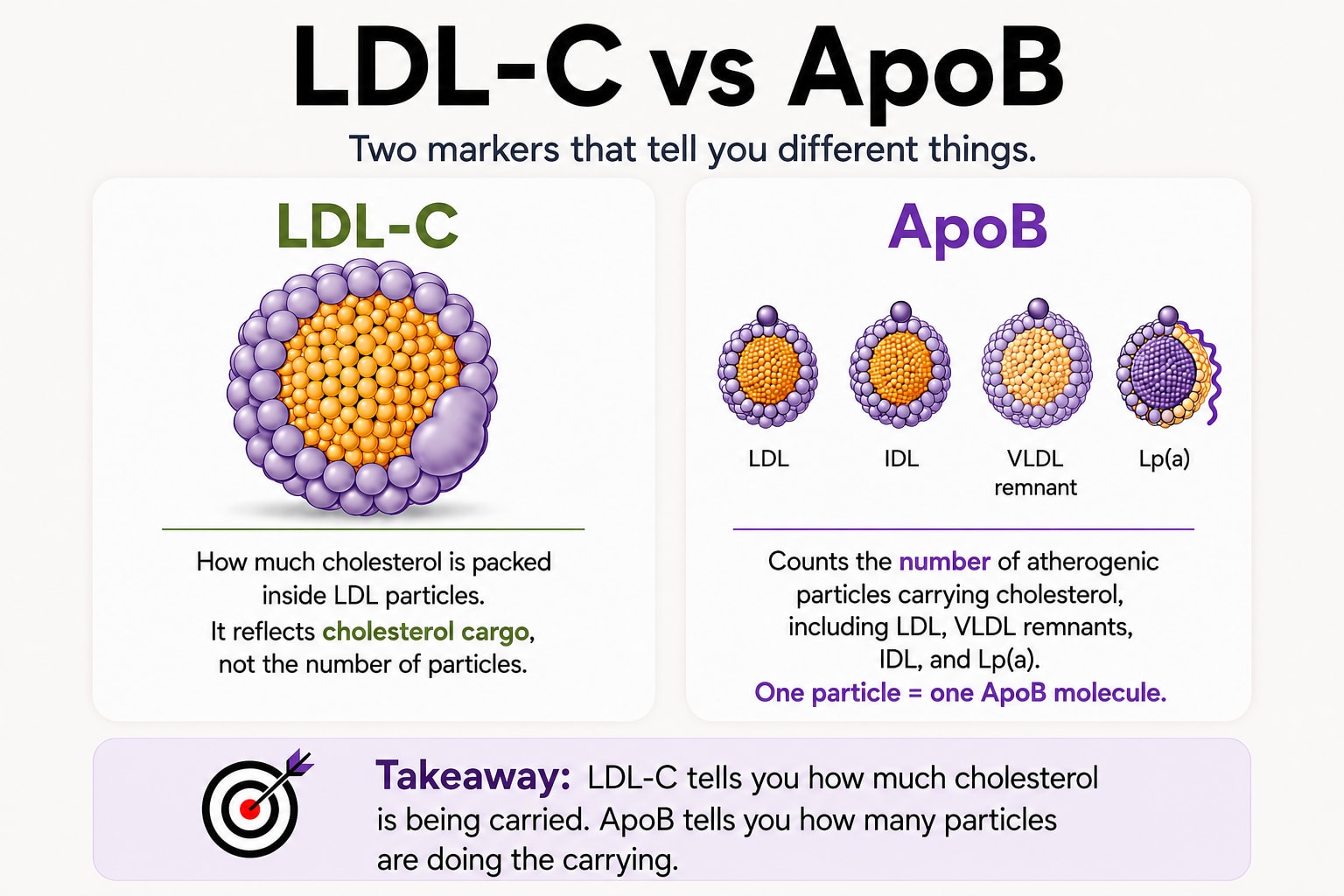
Most standard lipid panels report LDL cholesterol. That number has its uses, but it's increasingly seen as an incomplete picture.
Apo-B is the main protein found on atherogenic lipoprotein particles, the particles that can enter the artery wall and contribute to plaque formation. Some people have a normal LDL cholesterol but elevated Apo-B, meaning they have more of these plaque-forming particles than their LDL number suggests. The particle count, not just the cholesterol content, is what drives cardiovascular risk.
This study found that soluble fiber reduced Apo-B by approximately 4.5 mg/dL on average. A modest but real effect, and one that only matters if you're actually measuring Apo-B, which most routine panels still don't include.
You can't optimize what you're not measuring. That's as true for Apo-B as it is for anything else.
This is exactly why comprehensive testing changes the picture. Apo-B is part of a broader cardiovascular panel, which means it is a biomarker most clinicians don't routinely order. When you're evaluating whether a lifestyle intervention is working, whether that's dietary fiber, statins, or both, you need the full picture.
How soluble fiber actually works
Soluble fiber, unlike insoluble fiber, dissolves in water, and some forms become viscous in the gut. For LDL and total cholesterol, viscosity appears to be an important part of the mechanism. It can slow the absorption of dietary cholesterol. It can also trap bile acids, made from cholesterol, and pull them out through excretion, prompting the liver to pull more LDL from the bloodstream to produce new bile. It may also slow gastric emptying, which can blunt post-meal blood sugar spikes and may reduce insulin resistance, itself linked to elevated cholesterol synthesis.
Fermentable soluble fibers take this further. When they reach the colon, gut bacteria ferment them into short-chain fatty acids, including propionate and acetate, which may help regulate cholesterol synthesis and other lipid-metabolism pathways. The triglyceride reductions in this meta-analysis appear strongest in studies using fermentable fiber, a useful hint for anyone specifically targeting triglycerides.
Who benefits most
The subgroup data is worth noting. The people who saw the biggest lipid improvements were those with:
Hyperlipidemia: LDL reductions were nearly double the overall average (17.85 mg/dL)
Type 2 diabetes: total cholesterol dropped by an additional 6 mg/dL beyond the overall effect
Metabolic syndrome: Apo-B reductions were substantially larger, particularly at higher doses and longer durations
This may partly relate to insulin resistance, especially in type 2 diabetes and metabolic syndrome, where glucose and lipid metabolism are often disrupted together. In general, people with more disrupted baseline lipid metabolism may have more room for fiber to move these markers.
For healthy individuals with normal lipids, the effects are still real, just smaller.
The practical math
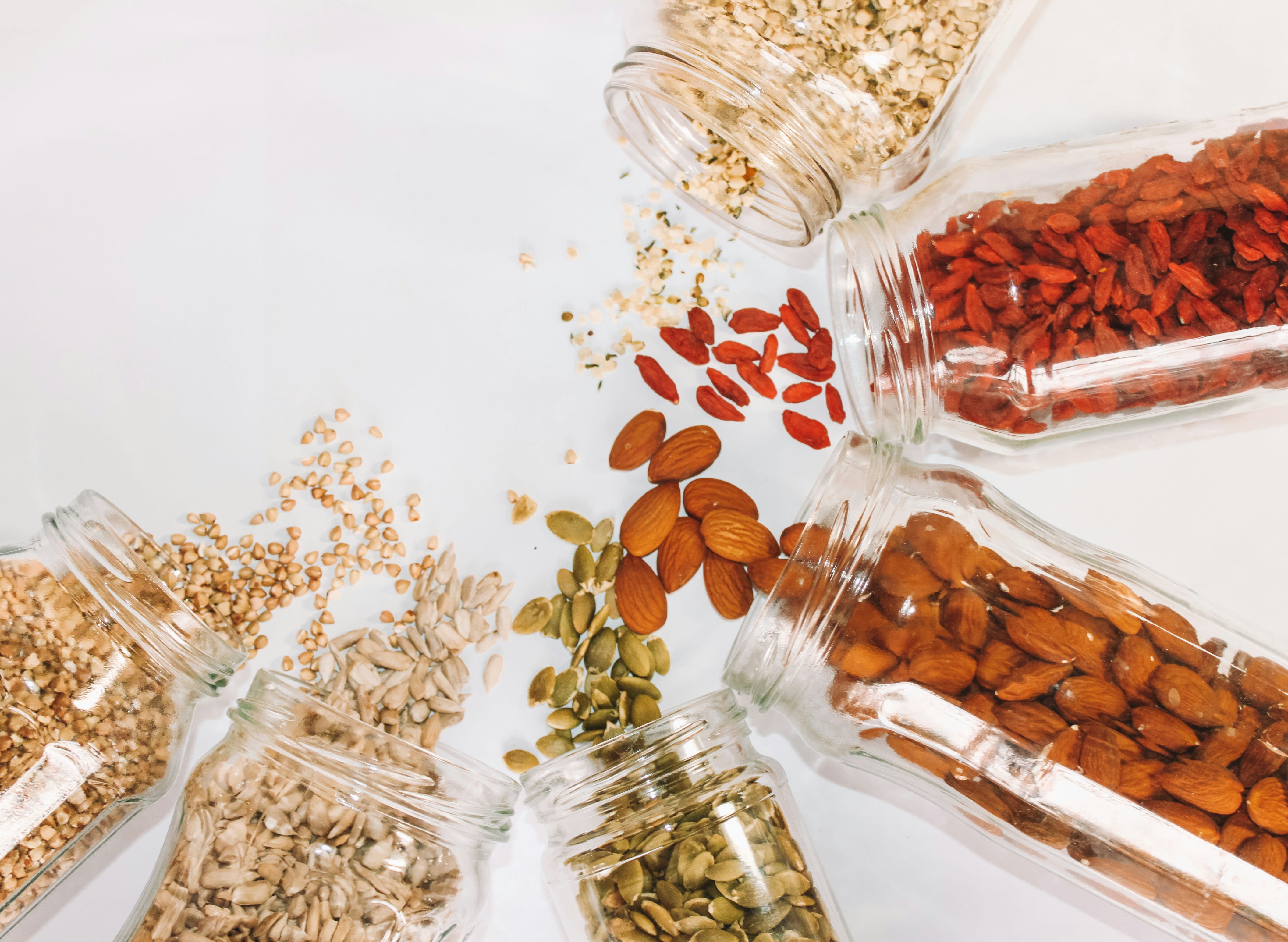
Fifteen grams per day of soluble fiber is the dose this analysis flags for the most robust effects across triglycerides and total cholesterol. That's achievable. A bowl of oatmeal has about 2 grams of soluble fiber. A cup of cooked black beans has around 5 grams. A psyllium husk supplement, the most common form studied in the research, typically provides 5 to 7 grams per serving.
One caveat: there was significant heterogeneity between studies, a very common factor across so many trials, but worth noting just the same. That doesn't mean the findings aren't real. 181 RCTs pointing in the same direction is a powerful signal. It does mean the exact effect sizes should be held loosely, and individual response will vary.
The takeaway is directional, not prescriptive. Soluble fiber is a well-tolerated, inexpensive, food-accessible intervention with a consistent track record across a large body of controlled trial evidence. For most people, there is no good reason not to optimize it.
--
Personal note from Jordan
I want to be straightforward about something before I close us out... I've had Apo-B on my own lipid panel for the past year, and it changed how I think about my results in a way I didn't expect.
Before that, my standard LDL felt like a complete picture. It doesn't anymore. Once I could see the particle count alongside the cholesterol number, I realized I'd been making decisions based on an incomplete read. That's a strange thing to sit with when you work in this space professionally. It's also useful. Knowing more gave me clearer reasons to adjust things, including how seriously I take fiber intake on a daily basis.
The research in this meta-analysis is compelling on its own terms. 181 RCTs and 14,500 people pointing in the same direction is not a small signal. But the finding that stands out to me isn't any single effect size. It's the Apo-B result, modest in magnitude but meaningful in what it implies: that a well-tolerated, inexpensive dietary intervention is moving a marker most people never even get the chance to measure.
If this article does one thing, I hope it makes you curious about what's on your panel and what isn't. The intervention only matters as much as your ability to track whether it's working.