
Science Corner 33 | Peptides: Power, Promise, and the Gray Zone of Modern Biohacking


This science corner is longer than many of our previous issues.
Peptides are complex, interesting, valuable, and provocative. We wanted to be thorough and provide a strong basis for everyone to understand what they are, how they work, and ways to remain safe, if using them.
The article includes links to new nutrient pages that we have developed covering several of the most prominent peptides, where you can explore their status, common applications, and proposed future uses.
SuppCo is interested in learning more about how our community is using peptides so we can better serve you. Click here to take a short survey and share your experiences and perspectives.
Why Is Everyone Talking About Peptides?
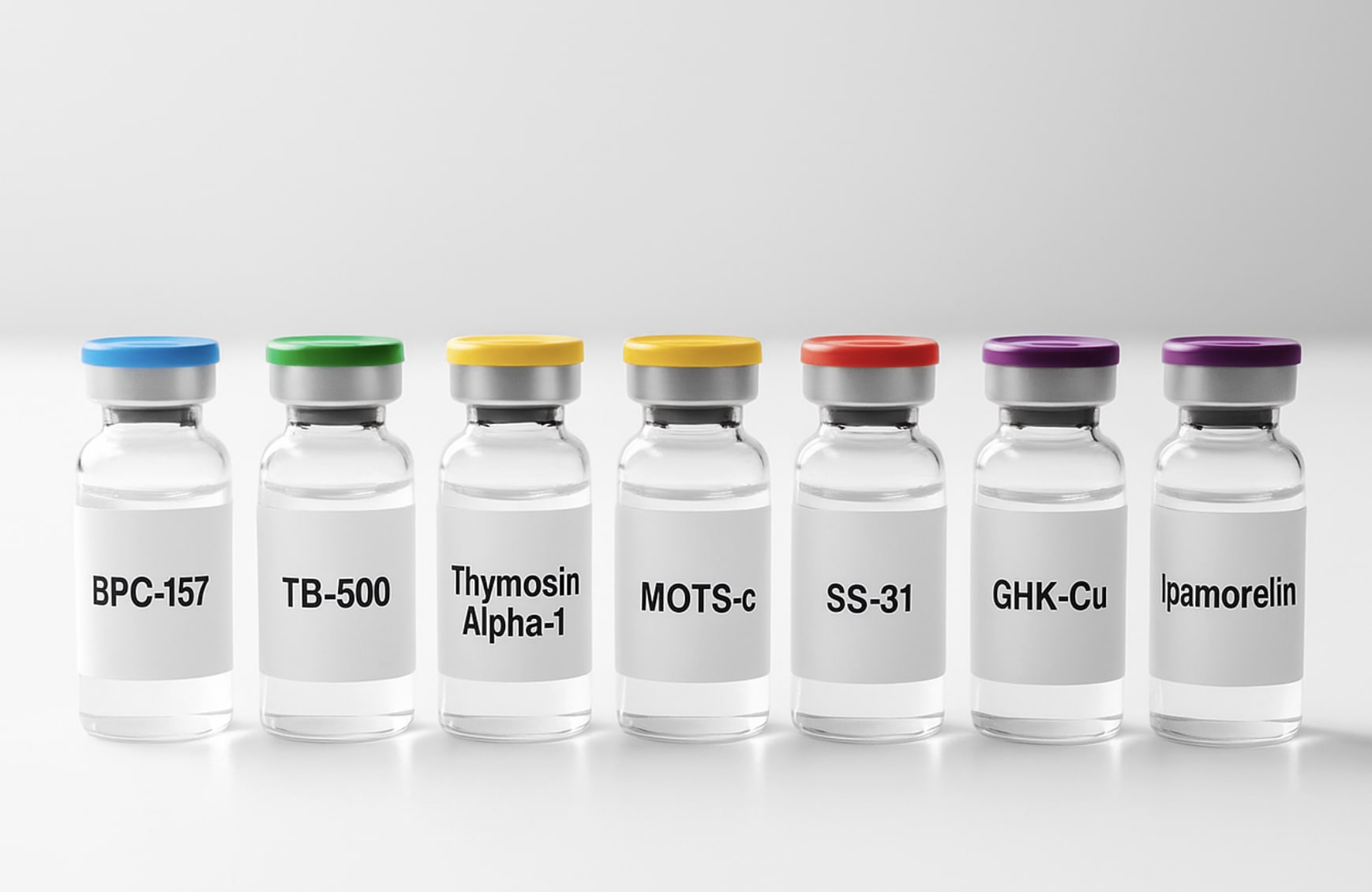
Peptides have become one of the most talked-about frontiers in performance and longevity science. From social media to clinical labs, they are everywhere, promising fat loss, muscle gain, improved sleep, and even cellular repair. Yet for all the excitement, much of the conversation remains polarized, either full of hype or heavy with skepticism. The truth, as with most things in science, lies somewhere in between.
At SuppCo, we recognize that peptides are becoming an increasingly important part of the supplement and wellness landscape. While this is still an emerging area, we are excited to expand our coverage and bring more clarity to how these compounds fit into the broader ecosystem of health optimization.
What Are Peptides?
Peptides are short chains of amino acids, typically between 2 and 50 in length. They are essentially miniature proteins, and their small size allows them to act as precise messengers within the body, triggering specific biological effects. Insulin, for example, is a peptide that revolutionized medicine by controlling blood sugar. More recently, GLP-1 drugs such as semaglutide (Ozempic) have demonstrated just how powerful peptides can be when engineered to target the right receptors.
These examples highlight an important point: peptides are not fringe science. They are the backbone of some of the most successful pharmaceuticals in modern medicine. What makes the current peptide boom unique is that the excitement has moved beyond the clinic into the wellness and longevity community, where research-grade compounds are being used in highly experimental ways.
Why Are Peptides So Hard to Classify?
Peptides exist in a scientific gray zone. They are too complex to fit comfortably into the supplement category, yet they do not always meet the regulatory definition of a drug. Most supplements are composed of nutrients, herbs, or other naturally occurring compounds that can be taken orally and are generally recognized as safe. Peptides, on the other hand, are biologically active molecules that often require injection or advanced delivery systems to be effective.
This ambiguity creates both regulatory and practical challenges. In the United States, the FDA typically classifies peptides intended for therapeutic use as drugs, which means they require clinical trials and formal approval for specific indications. Yet many peptides are naturally occurring in the human body, leading some to argue that they should be treated more like nutraceuticals or bioactive compounds.
The result is a landscape that is difficult for consumers to navigate. Peptides are blurring the line between supplements and pharmaceuticals, effectively creating a new category: one that sits somewhere between consumer wellness and clinical medicine. Understanding where each compound falls on that spectrum is critical for anyone considering their use.
The Expanding Peptide Landscape
There are now hundreds of peptides being discussed and used in wellness circles. Some, such as BPC-157 and TB-500, are thought to promote healing and tissue repair. Others, such as CJC-1295 and Ipamorelin, are marketed for growth hormone support. Still others, like Melanotan II, have found popularity for skin pigmentation and libido enhancement. The diversity of proposed effects is vast, and so is the quality of the evidence.
A few peptides have substantial preclinical or early human data supporting their mechanisms, but most have not undergone the rigorous clinical trials needed to establish safety and efficacy in humans. This does not mean they do not work, it means the data are incomplete. Anecdotes, early studies, and self-experimentation fill the gap, which can be both exciting and risky.
Encouragingly, the clinical landscape is starting to evolve. Just recently, SS-31 (Elamipretide) was formally approved by the FDA for the treatment of Barth Syndrome, a rare mitochondrial disorder. While this approval applies only to that specific condition, it marks an important milestone for peptide research more broadly. Each new regulatory success helps expand the field, attract funding, and deepen scientific understanding. The more attention peptides receive, the more likely we are to see further research into their safety and potential applications.
SuppCo is interested in learning more about how our community is using peptides so we can better serve you. Click here to take a short survey and share your experiences and perspectives.
Peptides on the Rise: What They Do and Where the Evidence Stands
While the scientific landscape is vast, a few peptides have become especially popular among early adopters. Most fall into a handful of broad categories, including repair and recovery, immune modulation, metabolic health, and performance. Here are some of the most frequently discussed examples:
BPC-157: Originally derived from a protein in gastric juice, BPC-157 is believed to accelerate tissue repair, particularly in tendons, ligaments, and the gut. Animal data are promising, but robust human trials remain limited.
TB-500 (Thymosin Beta-4 fragment): Another peptide often linked to recovery, TB-500 is thought to aid wound healing and inflammation control, though it too lacks strong human evidence.
Thymosin Alpha-1: A naturally occurring immune peptide studied for enhancing immune response and reducing inflammation. It has legitimate clinical use in certain contexts, such as chronic viral infections, though not as a general wellness compound.
MOTS-c: A mitochondrial-derived peptide that influences metabolism and insulin sensitivity. Research suggests it may play a role in energy regulation and healthy aging, but most data come from animal studies.
SS-31 (Elamipretide): Recently approved by the FDA for Barth Syndrome, SS-31 is designed to protect mitochondrial membranes from oxidative stress. It is being studied for muscle function and age-related mitochondrial decline and represents one of the most rigorously investigated peptides in this class.
GHK-Cu: A naturally occurring copper-binding peptide that supports skin repair and hair growth. It has cosmetic and dermatologic applications, and emerging interest in broader regenerative effects.
CJC-1295: A growth hormone–releasing hormone (GHRH) analog that stimulates the body’s natural production of growth hormone. It is often combined with other peptides for performance and recovery goals.
Ipamorelin: A growth hormone secretagogue that targets ghrelin receptors. Known for its mild side effect profile compared with older compounds, it is frequently used alongside CJC-1295 in peptide “stacks.”
Each of these peptides targets different biological pathways, and while early results can be compelling, few have undergone the rigorous validation necessary for widespread clinical adoption. The key is to recognize that anecdotal evidence and mechanistic plausibility are not substitutes for long-term safety data.
The Art and Risk of Peptide Stacking
As the peptide community has grown, so has the practice of “stacking,” combining multiple peptides to achieve synergistic effects. In theory, this makes sense. The body’s signaling networks are interconnected, and targeting multiple pathways could yield greater results. For example, pairing a growth hormone secretagogue like CJC-1295 with a recovery peptide such as BPC-157 might support both performance and repair.
However, stacking also multiplies the unknowns. Interactions between peptides are not well-studied, and the more variables introduced, the harder it becomes to attribute results or side effects. Moreover, dosing regimens and timing strategies shared online often lack scientific validation, relying instead on community consensus. Experimentation without guardrails can blur the line between optimization and risk.
The Gray Market and the Question of Legitimacy
Peptides occupy a unique regulatory space. Many of them are classified as research chemicals, meaning they can be legally sold for laboratory use but not for human consumption. In practice, this has created a gray market where consumers can buy vials labeled “for research only” from online vendors. These products may vary widely in purity, stability, and sterility, which poses real safety concerns.
While compounding pharmacies and certain clinical providers offer prescription peptides in controlled settings, the majority of what circulates online lacks oversight. That does not mean all products are unsafe, but it does highlight the importance of sourcing, testing, and transparency. Unfortunately, those are precisely the areas where the gray market often falls short.
Why This Field Matters
Peptides sit at the intersection of biotechnology and personal health experimentation. Their potential is enormous, these are compounds that can influence metabolism, tissue regeneration, immune signaling, and more. At the same time, their complexity demands respect. The speed at which they have moved from clinical research to consumer enthusiasm has outpaced both regulation and education.
At SuppCo, we are excited to see where this area leads. Peptides represent a new chapter in the story of how supplements, pharmaceuticals, and consumer wellness intersect. Our goal is to help people navigate this new frontier with the right balance of curiosity and caution.
The most constructive way forward is not to dismiss peptides outright, nor to embrace them blindly. Instead, the field needs continued research, standardized manufacturing, and thoughtful communication about risks and benefits. The evolution of peptide science is happening in real time, and the conversations we have now will shape how responsibly it grows.
--
Personal note from Jordan
Peptides, to me, represent the “wild west, with guardrails.” We know enough to make educated guesses about their potential, but not enough to fully optimize or predict outcomes. And that is okay. Traditional science moves slowly, and responsible experimentation has always played a role in discovery.
Still, I urge anyone exploring peptides to do so with awareness and caution. Understand the risks, know your sources, and make informed decisions. I am not one of the more avant-garde self-experimenters in this space, but I support their curiosity and rigor. It is through that boundary-pushing, done thoughtfully, that the field will mature. I look forward to seeing how this next chapter of peptide science unfolds.
SuppCo is interested in learning more about how our community is using peptides so we can better serve you. Click here to take a short survey and share your experiences and perspectives.