
Why Saffron Gets Called “Nature’s SSRI”

Saffron has an unusual place in mood research: it has been tested not only against placebo, but against prescription antidepressants.
That is where the “nature’s SSRI” nickname comes from. It is catchy, but not quite accurate. Saffron is not a pharmaceutical SSRI, and it should not be treated like one. What makes it interesting is that, unlike many mood support supplements, it has been studied in trials that compare it with established medications.
In controlled studies, saffron has been compared with fluoxetine, sertraline, and placebo. Across several trials, it performed better than placebo and appeared broadly comparable to SSRI medications on symptom scores.
That does not mean saffron is equivalent to antidepressant treatment. The studies are still relatively small, many focus on mild to moderate symptoms, and saffron’s biology appears to extend beyond serotonin reuptake alone.
But that is also why saffron is worth a closer look. This is one of the rare botanical extracts that has been tested in a clinical framework most supplements never enter.
The clinical evidence behind saffron
The “nature’s SSRI” label comes from a specific kind of evidence: saffron has not only been tested against placebo, but also directly against prescription antidepressants.
A 2024 systematic review pooled 46 randomized controlled trials on saffron and its active compounds in individuals with neurological and psychiatric conditions, as well as healthy participants.
In depression trials, saffron performed better than placebo and appeared non-inferior to conventional antidepressants. In clinical terms, “non-inferior” means it did not test worse than the comparator medication within the limits of those studies.
One important trial compared saffron with sertraline, a commonly used SSRI, in 50 older adults with major depressive disorder. That matters because many supplement studies focus on milder symptoms. In this study, saffron and sertraline performed comparably when assessed on a standard depression rating scale.
The most direct test came from a 2025 meta-analysis of randomized trials comparing saffron with SSRIs for depression and anxiety. Across eight studies, saffron and SSRIs produced similar changes in symptoms, with no statistically significant difference between groups.
Why saffron stands out
What makes saffron unusual is not that every study is perfect. It is that a botanical extract has entered a level of clinical testing many mood support supplements never reach.
The evidence base has also started to broaden. The largest saffron mood trial to date followed 202 adults with depressive symptoms for 12 weeks. Participants taking saffron improved more than those taking placebo, with 72% reaching a clinically meaningful symptom reduction compared with 54% in the placebo group.
The comparison with SSRIs has extended beyond depression as well: in the 2025 meta-analysis, anxiety symptom reduction was also not significantly different between saffron and SSRIs.
One finding is especially relevant in the supplement context: participants taking saffron reported fewer adverse effects than those taking SSRIs in the meta-analysis.
That does not make saffron risk-free, and it does not make it interchangeable with medication. But it helps explain why saffron has attracted attention as a mood-support option.
How saffron might work
The nickname deserves some unpacking.
SSRI stands for selective serotonin reuptake inhibitor. These medications increase serotonin signaling by blocking the reuptake of serotonin back into neurons, leaving more serotonin available in the synapse.
Saffron is not an SSRI in the pharmaceutical sense. But it does appear to interact with serotonin signaling, which is where the comparison begins.
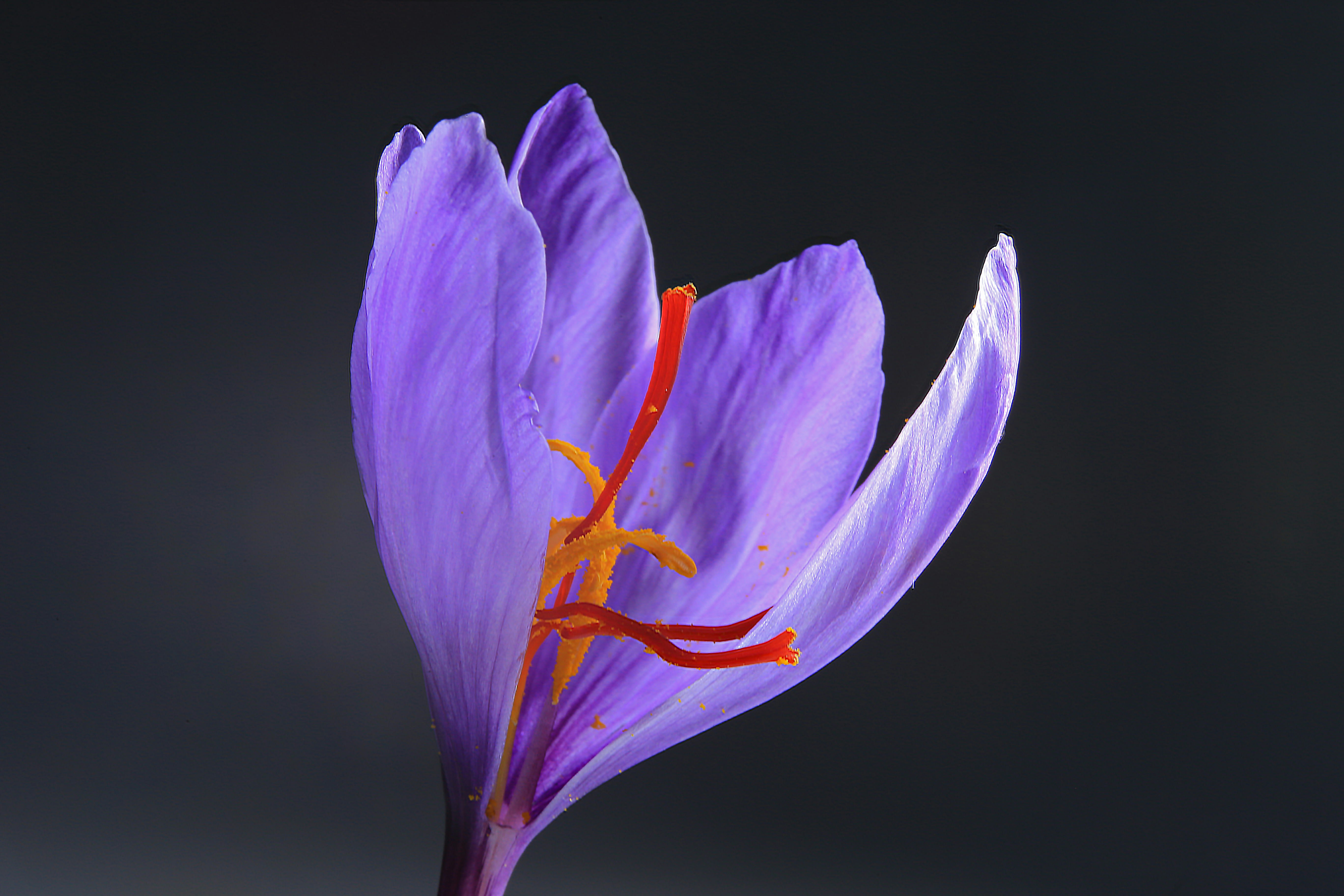
Saffron’s two best-known active compounds are crocin and safranal.
Crocin is one of the pigments responsible for saffron’s deep red color. Safranal contributes to its aroma. Preclinical and mechanistic research suggests that these compounds may influence the reuptake of serotonin and dopamine, two neurotransmitters involved in mood regulation.
That gives saffron some overlap with the direction of SSRI activity: support neurotransmitter availability by influencing reuptake.
The story beyond serotonin
A 2024 mechanisms review described saffron’s antidepressant effects as involving several overlapping systems: serotonergic signaling, antioxidant activity, anti-inflammatory effects, neuroendocrine modulation, and neuroprotection.
That matters because depression is not only a serotonin problem. Mood disorders are often discussed through the lens of neurotransmitters, but research also points to inflammation, oxidative stress, stress hormone dysregulation, and changes in neuroplasticity.
Saffron appears to touch several of these systems. It has antioxidant and anti-inflammatory activity. It may influence the body’s stress response pathways.
There is also evidence, mostly from preclinical research, that saffron may support BDNF, a growth factor involved in neuronal health and adaptability.
This is where the “nature’s SSRI” label becomes both useful and incomplete. It captures the most familiar part of the mechanism, but it flattens the rest.
Saffron does not appear to act only through serotonin. It is better understood as a compound that may engage several mood-relevant pathways at once, with serotonin being one part of that broader picture.
That broader action may also help explain the tolerability signal seen in some trials. SSRIs act directly on serotonin reuptake, which is one reason side effects such as nausea, sleep disruption, and sexual dysfunction can occur, especially early in treatment. Saffron may produce a gentler effect on neurotransmitter systems while also potentially acting through antioxidant and anti-inflammatory pathways.
That explanation is plausible, but not settled. The clinical pattern is interesting. The mechanism is still being worked out.
Where the evidence is weaker
The more careful version of the saffron story is less dramatic than the headline.
First, placebo responses are high in mood studies. In the large 2025 saffron trial, more than half of the placebo group also reached a clinically meaningful improvement. That is not unusual in depression research. Mood outcomes appear to be highly placebo-sensitive, which means some of the improvement seen in saffron trials may reflect the same nonspecific response that can happen in placebo groups.
Second, not every recent trial is positive. A 2025 placebo-controlled study in healthy adults with subclinical low mood found no significant benefit on its primary measure of combined depressive, anxiety, and fatigue symptoms. It also found no significant change in inflammatory markers or stress response sytem reactivity. This is important because it shows that saffron’s effects may depend on the population studied, baseline symptom severity, formulation, dose, or study design.
Third, some of the strongest modern data is linked to specific commercial extracts. Several trials were funded or co-authored by companies connected to the standardized saffron products being tested. That does not invalidate the findings, but it does raise the bar for independent replication.
Finally, the mechanism evidence is still developing. The serotonin, dopamine, BDNF, anti-inflammatory, and antioxidant pathways are biologically plausible, but much of that evidence comes from animal, laboratory, or indirect human data. The clinical trials show symptom changes. They do not fully prove which mechanism is driving those changes in people.
That is why the best interpretation is measured: saffron is promising, but not proven as a stand-alone treatment.
What this means if you are considering saffron
Saffron is one of the more evidence-backed mood support supplements, but the practical answer is not “sprinkle more saffron on your food.” The mood studies generally used standardized saffron extracts, not culinary saffron.
For adults with mild low mood, stress-related mood changes, or looking for moderate mood support, saffron may be reasonable to consider as a mood support supplement. It is not a replacement for therapy, antidepressants, or medical care for major depression, but it may be a lower-risk option to discuss with a clinician if someone is looking for non-prescription support.
The studied dose is usually around 28 to 30 mg per day, often taken as 14 to 15 mg twice daily. Some trials use once-daily dosing, but the key point is the total daily amount and the extract standardization.
When choosing a product, look for a saffron extract that clearly lists the dose per serving and ideally the standardization of the extract, such as crocin, crocins, safranal, or a named clinically studied extract. A vague “saffron” supplement with no extract details is less useful because it may not match the material used in clinical trials.
Quality matters more than usual with saffron because it is expensive and vulnerable to adulteration. For this ingredient, third-party testing or strong quality-control documentation is a meaningful plus.
The timeline is also important. Saffron is not an acute mood-shift supplement. In studies, benefits generally emerged over 6 to 12 weeks, so it is better thought of as a daily trial over one to three months rather than something to take only if feeling anxious or low.
The main caution is medication overlap. Because saffron appears to affect serotonin-related pathways, it should not be casually combined with SSRIs, SNRIs, MAOIs, or other serotonergic medications without clinician guidance. Anyone with clinical depression, bipolar disorder, suicidal thoughts, pregnancy, breastfeeding, or current psychiatric medication use should talk with a healthcare professional before using saffron.
So, is saffron really “nature’s SSRI”?
The nickname is understandable, but loose.
Saffron has something relatively rare in the supplement world: repeated randomized trials, including head-to-head comparisons with prescription antidepressants. In those studies, saffron often performed better than placebo and comparably to SSRIs, with fewer reported adverse effects in some analyses.
It also has a plausible serotonergic mechanism, which helps explain where the SSRI comparison came from.
But saffron is not an SSRI. It appears to work through several biological systems, not just serotonin reuptake. The evidence is still limited by small trials, mild-to-moderate study populations, industry-linked research, and the need for larger independent studies.
So the most accurate read is this: saffron is one of the more evidence-backed mood support supplements, but it is not a substitute for mental health care or antidepressant treatment.
“Nature’s SSRI” is a useful shorthand. It should not be mistaken for a clinical verdict.
This article covers a mental-health topic. If you are dealing with depression or anxiety, saffron is not a substitute for professional care. Any changes to treatment, especially antidepressant medication, should be discussed with a clinician.