
SuppCo Tested | Pre-Workout

Pre-Workout Powders: What They Are, How They Work, Why They Matter
For this final 2025 issue of SuppCo Tested, we're moving our format to an article form instead of PDF.
And boy do we have some great news.
For this round, and for the first time in SuppCo Tested history, all products passed.
Pre-workout powders, a category historically known for variability, over-stimulation, and sometimes questionable labeling, just delivered one of the strongest performances we’ve recorded to date.
Pre-workout supplements are designed to prepare the body and mind for exercise by optimizing energy production, blood flow, and mental focus. Biologically, they act on several key systems simultaneously: the nervous system, cardiovascular function, and skeletal muscle metabolism. Most contain combinations of caffeine, L-citrulline, beta-alanine, and sometimes creatine, each targeting a different component of performance.
Caffeine remains the backbone of nearly all pre-workouts. As a central nervous system stimulant, studies show it blocks adenosine receptors, reducing fatigue perception while enhancing alertness and reaction time. Its ergogenic effects have been demonstrated across endurance and strength studies, typically in doses of 150–350 mg per serving. The sweet spot is often personalized: too little, and performance barely moves; too much, and jitteriness or rapid heart rate can offset the benefit.
L-Citrulline, often listed as pure citrulline or citrulline malate, boosts nitric oxide production through the arginine pathway. This biochemical process widens blood vessels, and studies show this can result in improved nutrient delivery, while reducing muscular fatigue. The end result? Better endurance and those unmistakable “pumps” that lifters chase. The effective range is usually 4-8 grams per serving, though our testing shows many brands overshoot, perhaps to stand out in a crowded market.
Beta-Alanine works differently. Research demonstrates it can increase intramuscular carnosine levels, buffering lactic acid accumulation. This translates to longer high-intensity efforts, though the well-known tingling sensation (“paresthesia”) can surprise new users.
Creatine, when present, supports ATP regeneration and power output, especially during short bursts of maximal effort.
Together, these ingredients form a synergistic mix: caffeine for the brain, citrulline for circulation, beta-alanine for buffering, and creatine for muscle energy. Yet dosing consistency remains the Achilles’ heel of this category. One scoop might deliver the perfect balance for an elite athlete; another, from a different brand, could provide twice the caffeine and half the active nitric oxide support.
From a safety standpoint, pre-workouts are generally well tolerated when used as directed, but stacking multiple stimulants or exceeding label recommendations can amplify risks. Some formulas once included banned stimulants such as DMAA or DMHA, compounds that produced intense, but unsafe, cardiovascular effects. Responsible formulation now emphasizes transparency, ingredient testing, and realistic dosing over reckless stimulation.
In practical terms, pre-workouts sit at the crossroads of science and behavior. They are as much about physiology as they are about ritual, the scoop before the session, the spark before the sweat. When done right, they can enhance performance safely and measurably. When done wrong, they can undermine trust in the entire supplement industry.
What We Tested, and What We Found
For this round, and for the first time in SuppCo Tested history, all products passed. Pre-workout powders, a category historically known for variability, over-stimulation, and sometimes questionable labeling, just delivered one of the strongest performances we’ve recorded to date.
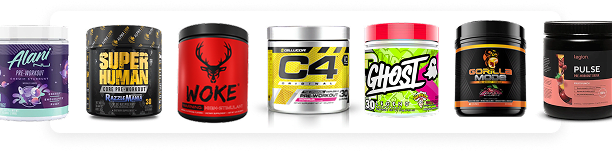
We selected ten of the most popular and widely used pre-workout powders currently dominating online marketplaces and gym shelves.
Our objective was straightforward: determine whether these products deliver their two core performance ingredients, caffeine and L-citrulline, at the levels claimed on their labels.
These two actives represent the foundation of most modern pre-workouts, balancing neurological stimulation with muscular endurance.
It’s important to note how we handled ingredient testing for citrulline. When product labels specifically listed L-citrulline, we tested for that compound directly. When labels listed citrulline malate, we analyzed the combined citrulline–malate molecule accordingly. This distinction matters: while both forms aim to support nitric oxide production, their chemical structures and assay signatures differ. Testing them accurately ensures the data truly reflects what the label claims, not a substitute compound.
Pre-workouts are uniquely suited for this kind of scrutiny. They’re complex formulas combining multiple actives at meaningful dosages, and even small inconsistencies in manufacturing can lead to large swings in potency. Because these products are marketed to both recreational and competitive athletes, accuracy isn’t just about label compliance, it’s about performance, safety, and trust.
*As always, SuppCo Tested uses a 95% threshold for our pass/ fail cutoff. Each product was purchased anonymously, either through the brand’s official Amazon storefront or their direct-to-consumer website. We avoid third-party sellers to minimize the risk of counterfeit or mishandled inventory. All purchases were logged, with lot numbers and full documentation, before being submitted for analysis. Testing was conducted by an ISO 17025-accredited third-party laboratory and, when a test fails, supplements were tested twice for consistency, specifically in cases where a product did not meet label claims on the first pass. It is important to note that these results are limited to the specific lots tested.
Pre-Workout Powder Testing Results
Digging Into the Data
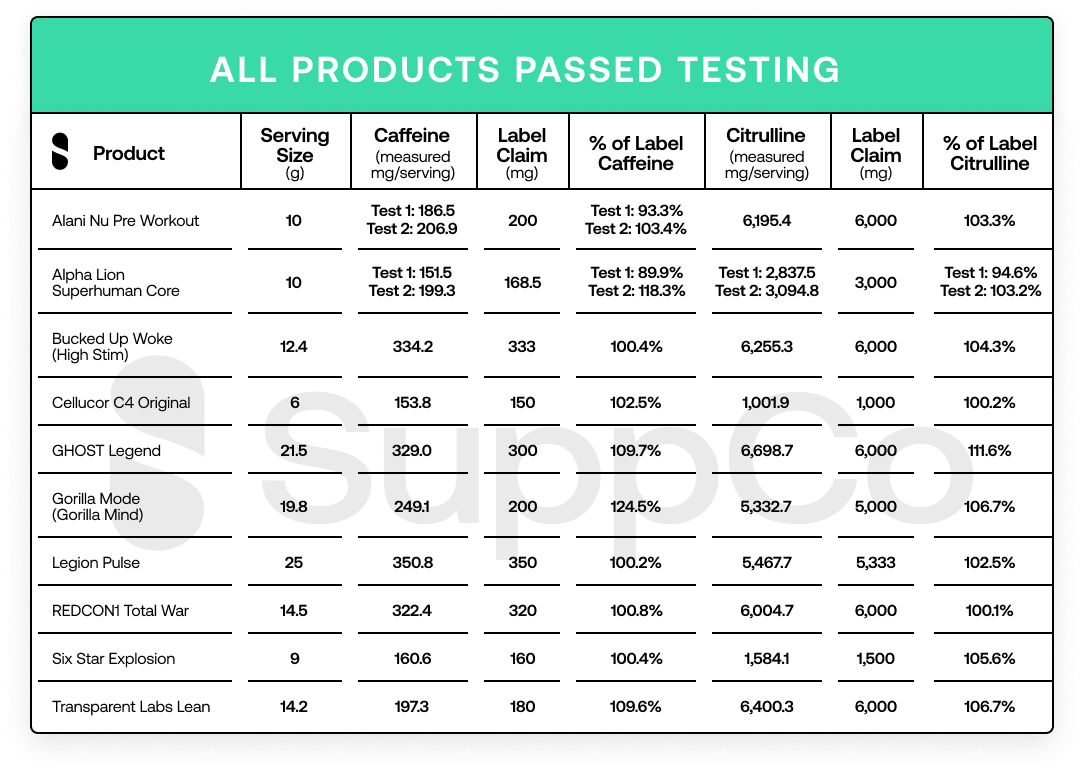
For the first time in our program’s history, every single product passed testing, and not just by a narrow margin. Across ten brands, caffeine and citrulline levels were remarkably accurate, with most landing within 5-10 % of label claims and several even overdelivering on key performance ingredients.
This is a major moment for the category. Pre-workouts have long carried a reputation for inconsistency and aggressive marketing, yet this dataset shows a clear shift toward scientific precision and consumer responsibility. The accuracy we observed rivals what we often see in pharmaceutical or clinical-grade nutrition products, a milestone that signals both maturity and accountability within the sports supplement industry.
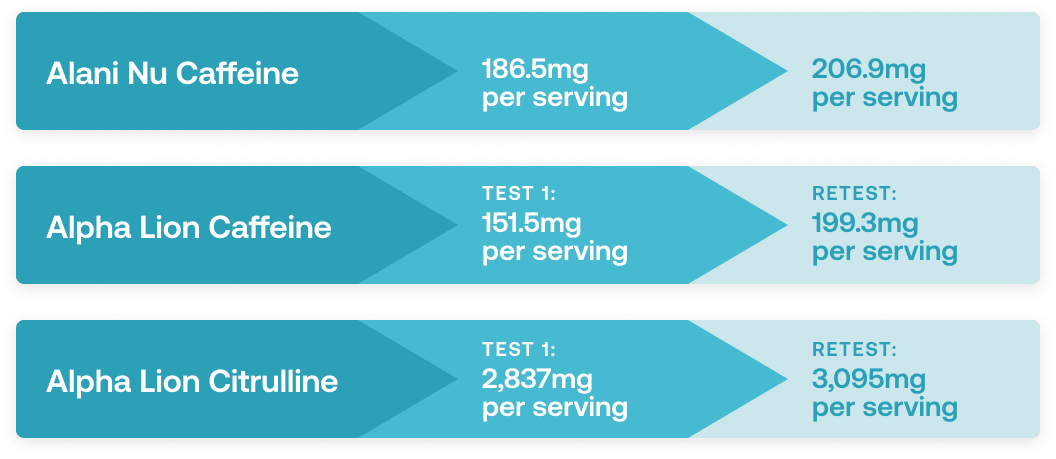
During testing, two products, Alani Nu and Alpha Lion, initially measured just below our 95 % passing threshold for caffeine, and Alpha Lion’s citrulline value was also slightly under. To confirm these results, we retested the exact same bottles, and all three came back comfortably within passing range. This wasn’t a manufacturing issue, it was an illustration of what can happen with powders.
Powdered supplements are mobile, fluid systems. Their active ingredients can shift, settle, or clump during transport and storage, creating micro-regions of slightly higher or lower concentration, commonly referred to as “hot spots.” These differences don’t mean the product is inaccurate overall; they simply reflect natural variation in powder flow and mixing uniformity.
In our case, those variations were easy to observe:
Digging Into the Data: Retests & Key Takeaways
All retests exceeded 95 % of label claims, confirming that each product was correctly formulated, the small differences simply came from how the powder was sampled. For consumers, the takeaway is straightforward: once you open a pre-workout, give the container a good stir or shake before scooping. It helps redistribute ingredients evenly and ensures each serving matches what’s on the label.
It’s also worth noting that the consistent overages in citrulline seen across multiple brands are not errors but rather a standard manufacturing practice. Because citrulline is a hygroscopic (moisture-attracting) amino acid that can degrade slightly over time, manufacturers often add a small intentional buffer to guarantee that the labeled amount remains accurate throughout shelf life. In practice, that “overage” may actually work in users’ favor, delivering a modest bonus to nitric oxide production and blood flow, especially when taken consistently.
One product worth noting is Gorilla Mode. Our test measured 249 mg of caffeine per serving versus the labeled 200 mg. The label also includes a “2-scoop” option listed at 400 mg caffeine. If someone were to take the full two scoops from this lot...
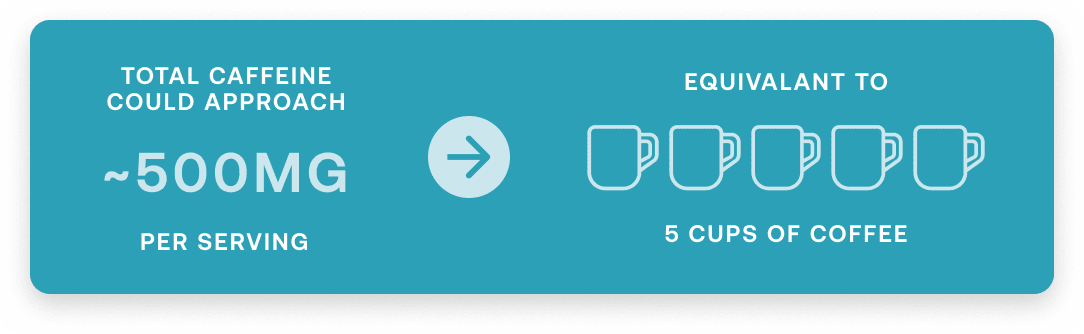
...a very high but not unsafe dose for most healthy adults, (though potentially excessive for caffeine-sensitive individuals). It’s not a formulation issue or a failure, but it’s a good reminder that caffeine tolerance varies widely, and doubling up on strong pre-workouts should be done with awareness.
After years of testing products across multiple supplement categories, seeing an entire field step up its game, and pass across the board, is the kind of progress we hoped SuppCo Tested could help inspire.
Serving Size: The Scoop Behind the Science
While every product in this report passed testing for label accuracy, it’s worth taking a closer look at serving size, because accuracy alone doesn’t always guarantee effectiveness.
The serving sizes in this category vary dramatically, ranging from Legion Pulse at 25 grams per serving and GHOST Legend at 21.5 grams, all the way down to Cellucor C4 Original at just 6 grams. On paper, that’s a more than fourfold difference in total powder weight, and that variation directly impacts how much room there is for performance-driving ingredients.
Scientific literature consistently points to a few key benchmarks for meaningful results:
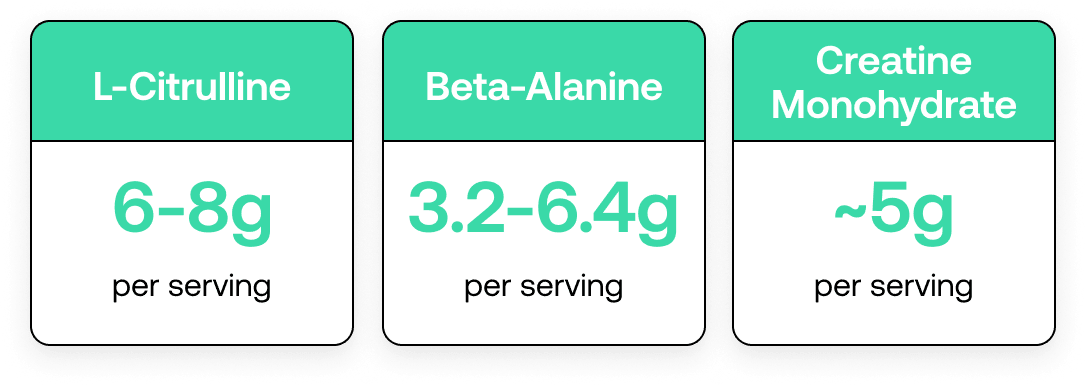
When you consider those numbers together, it becomes clear that some pre-workout formulas simply don’t have enough “space” in a single scoop to include all these evidence-based doses, especially when you factor in other common actives like betaine, taurine, tyrosine, and nootropics.
That doesn’t mean smaller servings are ineffective, just that they’re likely targeting different goals. A 6 g serving may focus primarily on stimulation (caffeine and focus ingredients), while a 20–25 g serving can more easily deliver full clinical doses for endurance and pump.
In the end, users should look closely at ingredient lists and amounts, and choose formulas that best align with their specific goals and needs. For some, that means prioritizing focus and quick energy; for others, it may mean emphasizing pump, stamina, or strength endurance. Label accuracy is step one, but tailoring the formula to your performance goals is where the real optimization begins.
What About Banned Stimulants?
Every product in this series was screened for prohibited substances, including DMAA, DMHA, sibutramine, and selective androgen receptor modulators (SARMs) such as LGD-4033 and Ostarine. All results were clean (no prohibited substances detected).
This is more than a technical outcome, it’s a meaningful signal of progress in a category that has not always been this clean. In past third-party investigations and published analyses, a number of pre-workout products were found to contain unlabeled or undeclared stimulants, including compounds that were either restricted by regulatory agencies or fully banned for safety reasons. These ingredients, once added for extra “kick”, often posed cardiovascular and neurological risks far beyond what users expected.
Seeing completely clean results across every product in this round is therefore a very promising step forward for the pre-workout space. It suggests that many leading brands have responded to growing consumer scrutiny and have prioritized compliance, transparency, and manufacturing integrity. This round of data reinforces that modern pre-workouts can deliver performance benefits safely, without crossing regulatory lines.
In short, the industry appears to be evolving in the right direction: from hidden hazards toward verified, science-backed formulations consumers can actually trust.
Where We Go From Here
When we began this testing cycle, I expected to find at least a few underperformers, brands overstating caffeine or inflating pump ingredients, but instead, we saw a genuine improvement in formulation integrity. Across the board, these pre-workouts passed testing. From a scientific perspective, that’s encouraging evidence that consumer awareness, regulatory oversight, and independent testing are raising the bar. And on a personal level, it’s rewarding to see how far the field has come since my own days formulating pre-workouts in the lab.
The pre-workout market still has areas to improve, especially around labeling clarity, serving size realism, and potential overreliance on mega-dosing trends, but this round demonstrates that precision and performance can coexist.
As always, our mission remains the same: to raise the bar for supplement quality through independent, repeatable testing. Next, we’ll be turning our attention to other high-impact categories where transparency is still lacking. Wherever hype exceeds evidence, we’ll be there to test the claims.
Let’s Make Sense of Supplements
If you found this report helpful, there’s a lot more waiting for you inside the SuppCo app. From TrustScores for over 20k rated products that you can search by nutrient, to a personalized analysis of your stack, to Expert Protocols from Dr. Mark Hyman, Dr. Robin Berzin and more, SuppCo is designed to help you make smarter, more confident health decisions.
Did you know? SuppCo just launched Pro, our premium subscription opportunity. SuppCo Pro gives users more tools and deeper personalization than ever to help them optimize their supplement stack. We’re launching tools to create your own personalized supplement plan, and to optimize your product quality, as well as special Pro user perks and access.
Personalized nutrient plan
Product quality optimization
Priority TrustScore requests
Unlimited stack analyses
Whether you’re just getting started with your stack or want to explore other supplements that fit your goals, the SuppCo app gives you science-backed guidance without the hype. It’s free to explore and packed with tools to help you cut through the noise.
Download the SuppCo app to get started.
*This report evaluates specific ingredients in specific product lots for label accuracy only. Testing results:
- Do not constitute medical advice, product endorsement, or safety evaluation
- Are limited to the lots tested and may not represent all product inventory
- Do not assess overall product efficacy, quality, or suitability for individual use
- Reflect testing at a single point in time under laboratory conditions
Ingredient function descriptions are based on published scientific literature and do not represent SuppCo's independent evaluation of these products for treatment or prevention of any medical condition. Dietary supplements are not evaluated by the FDA for safety or efficacy. Consult a qualified healthcare provider before using any dietary supplement, especially if you have medical conditions or take medications.
All trademarks are the property of their respective owners. Product identification is for testing purposes only and does not imply sponsorship or endorsement.