
Two New Studies Link Common Inactive Ingredient Potassium Sorbate to Cancer and Diabetes

Earlier this week, CNN Health covered two newly published studies from France examining the long term health effects of common food preservatives. While the headline focused broadly on preservatives, one compound deserves particular attention, potassium sorbate. Potassium sorbate is widely used in foods and dietary supplements and has long carried a GRAS designation in the United States. New observational data now link higher dietary exposure to potassium sorbate with increased risk of both cancer and type 2 diabetes.
This matters immediately. Potassium sorbate appears in approximately 3,000 active products on SuppCo.
Within the SuppCo database alone, potassium sorbate appears in approximately 3,000 active products that have been stacked over 23,000 times across more than 16,000 unique users, highlighting how common daily exposure has become without most people realizing it.
What the new studies examined
Both studies drew from the NutriNet-Santé cohort, one of the largest and most detailed nutrition datasets in the world. The cohort includes over 170,000 French adults who have provided repeated, brand specific 24 hour dietary records since 2009, which are linked to national health outcomes.
The cancer analysis followed approximately 105,000 adults who were cancer free at baseline for up to 14 years. Researchers evaluated exposure to 58 food preservatives and focused more closely on 17 that were consumed by at least 10 percent of participants. While most preservatives showed no association with cancer risk, potassium sorbate stood out.
The type 2 diabetes analysis followed nearly 109,000 adults without diabetes at baseline. Individuals with the highest intake of certain preservatives had nearly a 50 percent higher risk of developing type 2 diabetes. Potassium sorbate was one of only a handful of preservatives associated with increased risk across both disease outcomes.
These analyses controlled for physical activity, alcohol intake, smoking status, medication use, overall diet quality, and exposure to other additives. While observational by design, the associations remained robust across multiple sensitivity analyses.
What the data show for potassium sorbate
In the cancer study, sorbates, particularly potassium sorbate, were associated with a 26 percent higher risk of breast cancer and a 14 percent higher risk of cancer overall. In the diabetes study, high intake of potassium sorbate was linked to a 49 percent higher risk of developing type 2 diabetes.
These findings do not prove causation. They do, however, raise a meaningful signal, especially given how frequently potassium sorbate is consumed and how early in life exposure often begins.
Researchers also pointed to supporting mechanistic data from animal, cellular, and gut microbiome studies suggesting potential roles for oxidative stress, inflammation, and microbiota disruption. These pathways are biologically plausible in both cancer development and metabolic disease progression.
Where potassium sorbate is commonly used
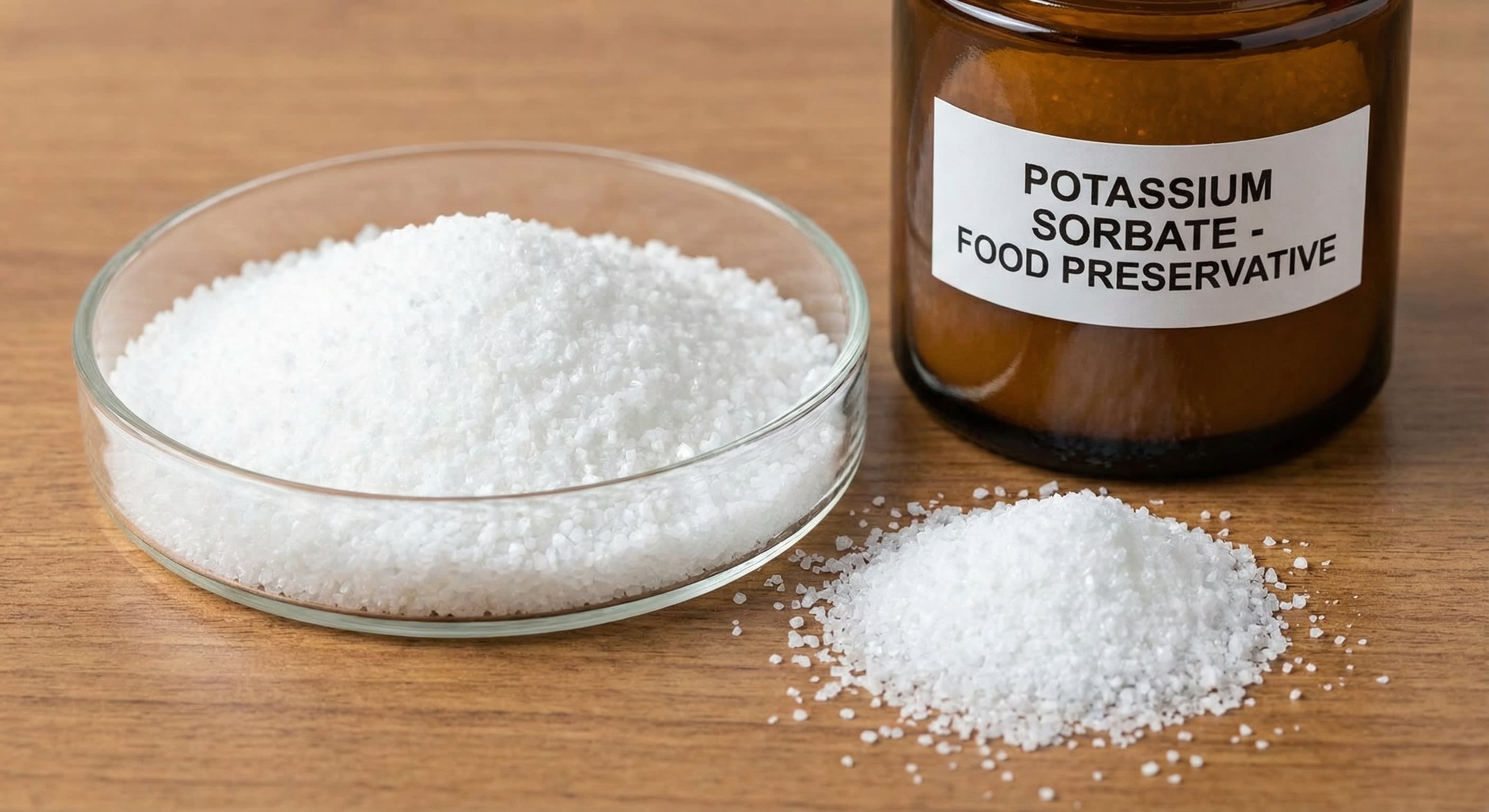
Potassium sorbate is valued for its ability to inhibit mold and yeast growth without altering taste or texture. As a result, it is commonly found in:
Protein powders, meal replacements, and ready to drink shakes
Gummy and chewable supplements
Liquid supplements, tinctures, and functional beverages
Baked goods, cheeses, sauces, and wines
This is not a niche exposure. For many people, potassium sorbate shows up across multiple products used daily.
Correlation, causation, and ethical limits
It is important to be precise about what these studies can and cannot tell us. Observational studies identify associations, not direct cause and effect relationships. That distinction matters.
At the same time, there is an ethical ceiling on the type of evidence we can ever collect. No institutional review board would approve a long term randomized trial designed to test whether chronic exposure to a preservative causes cancer or diabetes. Deliberately exposing people to a suspected carcinogen over decades is not ethical science.
Large scale observational studies, supported by mechanistic evidence, represent the strongest human data we are likely to obtain for these questions. Dismissing them because they are not randomized trials misunderstands both ethics and how public health science works.
How we are responding
Science is not static. Safety assessments should not be either.
SuppCo manages its excipient database as a living system that evolves as new evidence emerges. Based on the consistency of findings across cancer and metabolic outcomes, the scale of population exposure, and the strength of the NutriNet-Santé methodology, we are reclassifying potassium sorbate as a full risk excipient.
As of today, potassium sorbate will carry the following tags within the SuppCo platform:
Potential carcinogen
Potential adverse or chronic health effects
This update does not imply that every product containing potassium sorbate is unsafe. It does reflect a higher level of concern than previously warranted and a need for increased transparency.
What to do next
If you use supplements regularly, now is the time to check your stack. Many products contain potassium sorbate for stability or shelf life, even when alternatives exist.
Look for formulations that rely on different preservation strategies, simpler ingredient lists, or delivery formats that do not require preservatives at all.
Small, practical swaps can meaningfully reduce chronic exposure without sacrificing efficacy.
Science advances by revisiting what we think we know. Staying informed, asking better questions, and adjusting when the evidence changes is not overreaction.
Citations from this article
Hasenböhler A, et al. Intake of food additive preservatives and incidence of cancer: results from the NutriNet-Santé prospective cohort BMJ 2026. Link.
Hasenböhler, A, et al. Associations between preservative food additives and type 2 diabetes incidence in the NutriNet-Santé prospective cohort. Nat Commun 16, 11199 (2025). Link.